Catholic Practices and Their Biblical Foundations
Below are 10 Common Traditions in Catholicism along with their biblical support. Catholic worship and devotional life are often misunderstood, yet each practice is deeply rooted in Scripture and the life of the early Church.
1. The Mass: Central to Catholic Worship
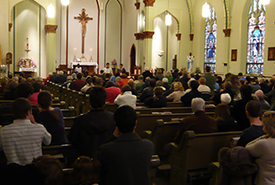
The Mass is the highest form of Catholic worship. It is a liturgical celebration including prayers, Scripture readings, the Eucharist, and blessings.
- Biblical support: Jesus instituted the Mass at the Last Supper when He said, “Do this in remembrance of me” (Luke 22:19; 1 Corinthians 11:23–26).
- The early Church gathered for “the breaking of the bread and the prayers” (Acts 2:42), and Revelation 4–5 reveals heavenly worship that the Mass participates in.
2. The Eucharist (Holy Communion)
Catholics believe in the real presence of Christ in the Eucharist—His body, blood, soul, and divinity. Receiving Communion profoundly unites the believer with Christ.
- Biblical support: “My flesh is true food, and my blood is true drink” (John 6:55).
- At the Last Supper, Jesus declared, “This is my body… this is my blood” (Matthew 26:26–28; Luke 22:19–20).
- St. Paul affirms this in 1 Corinthians 10:16–17, warning against unworthy reception (1 Corinthians 11:27–29).
3. Confession (Sacrament of Reconciliation)
Through confession, Catholics seek forgiveness from God by confessing their sins to a priest, who absolves them in Christ’s name.
- Biblical support: Jesus gave the apostles authority to forgive sins: “Whose sins you forgive are forgiven them” (John 20:21–23).
- St. James instructed, “Confess your sins to one another” (James 5:16).
- St. Paul spoke of the “ministry of reconciliation” entrusted to the apostles (2 Corinthians 5:18).
4. Praying the Rosary
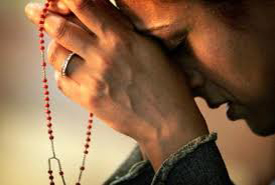
The Rosary is a devotion combining repetitive prayer with meditation on the life of Christ and Mary.
- Biblical support: The “Hail Mary” prayer comes from Gabriel’s greeting (Luke 1:28) and Elizabeth’s blessing (Luke 1:42).
- The “Our Father” comes from Jesus’ own words (Matthew 6:9–13).
- Mary herself models meditation: “Mary kept all these things, pondering them in her heart” (Luke 2:19).
5. Veneration of Saints
Catholics honor saints as models of holiness and ask for their intercession, recognizing their closeness to God in heaven.
- Biblical support: Revelation shows saints in heaven presenting our prayers to God (Revelation 5:8; 8:3–4).
- Scripture encourages us to imitate holy men and women (Philippians 3:17; Hebrews 12:1).
6. Celebration of Feast Days
The Church sets aside feast days to remember Christ’s saving work, the Virgin Mary, and the saints.
- Biblical support: God commanded Israel to observe holy days (Leviticus 23).
- Jesus Himself celebrated Jewish feasts such as Hanukkah (John 10:22).
- The Church continues this biblical pattern in celebrating Christmas, Easter, and Marian feasts.
7. Making the Sign of the Cross
Catholics often bless themselves by tracing a cross over their body, professing faith in the Trinity.
- Biblical support: Jesus commanded baptism “in the name of the Father, and of the Son, and of the Holy Spirit” (Matthew 28:19).
- The faithful are marked with God’s sign (Ezekiel 9:4), and Paul glories only in the cross of Christ (Galatians 6:14).
8. Fasting and Abstinence
Catholics fast and abstain from meat during Lent as a form of penance and discipline.
- Biblical support: Jesus fasted in the desert (Matthew 4:2) and taught, “When you fast…” (Matthew 6:16–18).
- The apostles fasted in prayer before major decisions (Acts 13:2–3).
- Jesus foretold, “The days will come when the bridegroom is taken away, and then they will fast” (Mark 2:20).
9. The Stations of the Cross
This devotion helps Catholics meditate on Christ’s Passion, retracing His final steps to Calvary.
- Biblical support: The Passion accounts (Matthew 26–27; Mark 14–15; Luke 22–23; John 18–19) form the foundation.
- Jesus commands, “If anyone would come after me, let him deny himself and take up his cross daily” (Luke 9:23).
10. Holy Days of Obligation
On designated holy days, Catholics are obliged to attend Mass and celebrate the mysteries of salvation.
- Biblical support: God commanded the Sabbath as holy (Exodus 20:8–11).
- The early Christians gathered on the first day of the week (Acts 20:7).
- Paul recognized the observance of sacred days within the Christian community (Colossians 2:16).
Guided by the Holy Spirit
These Catholic practices are not merely man-made traditions but gifts from the Holy Spirit to the Church.
Jesus promised, “When the Spirit of truth comes, He will guide you into all truth” (John 16:13),
and “The Advocate, the Holy Spirit, whom the Father will send in My name, will teach you all things
and remind you of everything I have told you” (John 14:26).
From the earliest days, the Church lived this reality:
“They devoted themselves to the apostles’ teaching and fellowship, to the breaking of bread and the prayers” (Acts 2:42).
Through the Spirit’s guidance, these practices have been faithfully handed down to deepen our communion with Christ,
unite us with the saints, and prepare us for the eternal worship of heaven.
What To Do At Mass |
Common Catholic Prayers |
The Rosary |
The Divine Mercy Chaplet |
You must be logged in to post a comment.