
Marxism and Christianity cannot coexist because Christian theology—with its idea of a fixed human nature—infuriated Marx, who was not merely an atheist but an open enemy of religion, famously dismissing it as “the opium of the people.” His disciples, led by Vladimir Lenin, consistently targeted the Church whenever they seized power. Churches were closed, clergy imprisoned or executed, and religious life systematically dismantled. These acts were not distortions of Marxism; they were its logical consequences.
Marxism cannot coexist with Christianity because Christianity asserts something Marxism must deny: an objective source of truth and meaning outside the state. As long as people believe they are created rather than constructed—accountable to God rather than ideology—total revolution remains impossible.
God places a ceiling over power. Marxism seeks a world with no ceilings.
Why Christianity Is the Real Obstacle
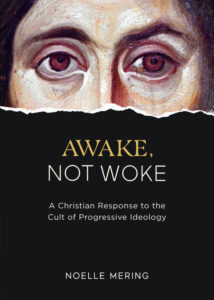 In Awake, Not Woke: A Christian Response to the Cult of Progressive Ideology, Noelle Mering argues that modern progressive ideology functions less like a political platform and more like a rival religion. It offers moral claims, purity codes, heresies, rituals, and excommunications—but without transcendence.
Christianity teaches:
-
Truth exists independent of power
-
Human nature is real and ordered
-
Meaning is received, not invented
Progressive ideology, by contrast, treats these claims as threats. If truth exists outside consensus, it cannot be rewritten. If human nature is fixed, it cannot be endlessly reconstructed. If God exists, the state cannot be ultimate.
Mering observes that this ideology does not simply reject Christianity—it seeks to replace it, offering salvation narratives stripped of grace and moral absolutes without God.
When Marxism Failed Economically
Classical Marxism predicted that workers crushed by material conditions would rise up against the bourgeoisie. But in the West, this uprising largely failed. Workers did not primarily interpret their lives through the lens of class struggle. They identified as fathers and mothers, believers, citizens, and moral agents.
Marxist theorists were forced to confront an inconvenient truth: culture mattered more than economics. Family, faith, tradition, and moral norms anchored people so deeply that they could not revolt.
So Marxism adapted.
The Shift from Revolution to Cultural Subversion
Thinkers such as Antonio Gramsci and later figures associated with the Frankfurt School concluded that power was sustained not merely by laws or force, but by cultural institutions that shape meaning—schools, churches, language, morality, and family structures.
Rather than seizing factories, the new strategy focused on undermining the institutions that transmit values across generations. This marked the shift from economic revolution to cultural transformation.
As Mering notes, once moral authority is destabilized, people no longer know what to appeal to beyond emotion, identity, or power.
Removing God Removes the Compass
The central aim of this cultural strategy is not simply secularization, but the elimination of objective reference points. God is not removed because He is false, but because He is limiting.
Without God:
-
Morality becomes negotiable
-
Identity becomes fluid
-
Meaning becomes political
-
Power becomes truth
Mering argues that modern ideology thrives on this instability. When nothing is fixed, everything is contestable—and those who control institutions control reality.
This explains why Christianity remains a target even when it poses no political threat. Its crime is metaphysical: it insists that reality is not infinitely malleable.
Critical Theory and the Deconstruction of Meaning
Critical Theory, as developed in the twentieth century, did not primarily aim to discover truth but to destabilize inherited structures. Religion, family, tradition, and even reason itself were treated as tools of domination rather than sources of wisdom.
The result is a culture in which:
-
Language is moralized
-
Disagreement is pathologized
-
Dissent is framed as harm
Mering observes that when truth is severed from transcendence, disagreement becomes intolerable. Without God, there is no neutral ground—only competing moral absolutes enforced by power.
The Endgame: A World Without Meaning
Early Marxist regimes relied on brute force—imprisonment, executions, propaganda—to eliminate religion. Cultural Marxism relies more on education, media, institutional pressure, and social penalties. The tactics differ, but the goal remains the same.
A society without God is a society without a compass.
Christianity insists that freedom depends on truth, and truth depends on something outside the regime. That is why Marxism—whether economic or cultural—must always wage war on the sacred. As long as God remains, ideology can never entirely rule.
Nominalism: Not the Cause, but the Open Door
It is essential to be precise. Nominalism did not cause cultural Marxism, nor is it responsible for twentieth-century ideological movements. However, nominalism did weaken the philosophical and theological foundations that once protected Western culture from such movements.
Nominalism, most often associated with William of Ockham, denies that universals—such as human nature, truth, or the good—exist as real features of reality. In this view, universals are merely names (nomina) we assign to individual things, not realities that exist independently of the mind.¹
This represents a decisive break from the classical Christian realism preserved by the Catholic Church, especially through the thought of Thomas Aquinas. In the Catholic tradition, universals are real, intelligible, and grounded in creation itself. Human nature is not invented—it is received. Truth is not constructed—it is discovered.²
As Aquinas famously defined it, truth is the “adequation of the intellect to reality” (adaequatio rei et intellectus).³ Meaning precedes power.
Nominalism subtly reverses this order.
From Meaning to Will, From Truth to Power
Once universals are denied, truth no longer refers to what is, but to what is asserted, defined, or willed. Over time, this shift places greater emphasis on will over reason, and power over participation in reality.
This philosophical turn matters because modern ideological systems—including cultural Marxism—depend on precisely this instability. They thrive in a world where:
-
Human nature is denied or endlessly redefined
-
Meaning is fluid and negotiable
-
Language creates reality rather than describes it
Nominalism does not lead inevitably to Marxism, but it erodes confidence in objective meaning, leaving societies more vulnerable to ideologies that claim reality itself is socially constructed.
As Catholic philosopher Étienne Gilson notes, once metaphysics is abandoned, ethics and politics quickly lose their grounding.⁴ What remains is will—either individual or collective.
Why Catholic Christianity Resists Ideology More Effectively
This helps explain why Marxist and post-Marxist ideologies consistently clash more sharply with Catholic Christianity than with more nominalist or voluntarist forms of theology.
Catholic Christianity insists that:
-
Nature precedes grace, and grace perfects nature
-
Human nature is intelligible and morally ordered
-
Freedom is ordered toward truth, not self-creation
As Noelle Mering argues in Awake, Not Woke: A Christian Response to the Cult of Progressive Ideology, modern ideology depends on the denial of givenness—givenness of sex, meaning, moral order, and ultimately of God.⁵ Catholic theology resists this because it affirms that reality is not plastic.
Ideologies that depend on reshaping identity, redefining morality, or reconstructing reality itself cannot fully succeed where human nature is understood as real and knowable.
Nominalism does not cause cultural Marxism—but it removes a crucial philosophical firewall that once prevented meaning from collapsing into power.
The Larger Picture
Cultural Marxism did not arise from medieval philosophers’ debates over universals. It arose because modern man increasingly forgot how to speak coherently about truth, nature, and meaning as realities independent of will.
Nominalism weakens that language.
Critical Theory exploits the weakness.
Christianity—especially in its Catholic form—stands in the way.
That is why modern ideological movements do not merely reject God. They must reject nature, truth, and reason itself. And that is precisely what the Catholic intellectual tradition refuses to surrender.
References
-
Awake, Not Woke: A Christian Response to the Cult of Progressive Ideology, Noelle Mering
-
Karl Marx, A Contribution to the Critique of Hegel’s Philosophy of Right
-
Antonio Gramsci, Selections from the Prison Notebooks
-
Max Horkheimer, Eclipse of Reason
-
Theodor Adorno, The Authoritarian Personality
-
“The Birth of Cultural Marxism: How the Frankfurt School Changed America,” ZeroHedge (2016)
-
William of Ockham, Summa Logicae, I.14–15.
-
Thomas Aquinas, Summa Theologiae, I, qq. 84–85.
-
Thomas Aquinas, De Veritate, q. 1, a. 1.
-
Étienne Gilson, The Unity of Philosophical Experience.