Why Catholic?
Why Catholic a question that many Christians find themselves wrestling with. Catholicism is not a denomination. It is the original, One, Holy, Universal & Apostolic Church. Universal, properly understood, means for all time, for all people, and for all places.
All forms of Christianity, of which the denominations number in the 10s of thousands, splintered from the original Christian Church, which was the Universal/Catholic Church.
Christ, as far as we know, never wrote anything; he did, however, teach the Apostles, who taught their disciples, and so on till today. This is why the Church is Apostolic.
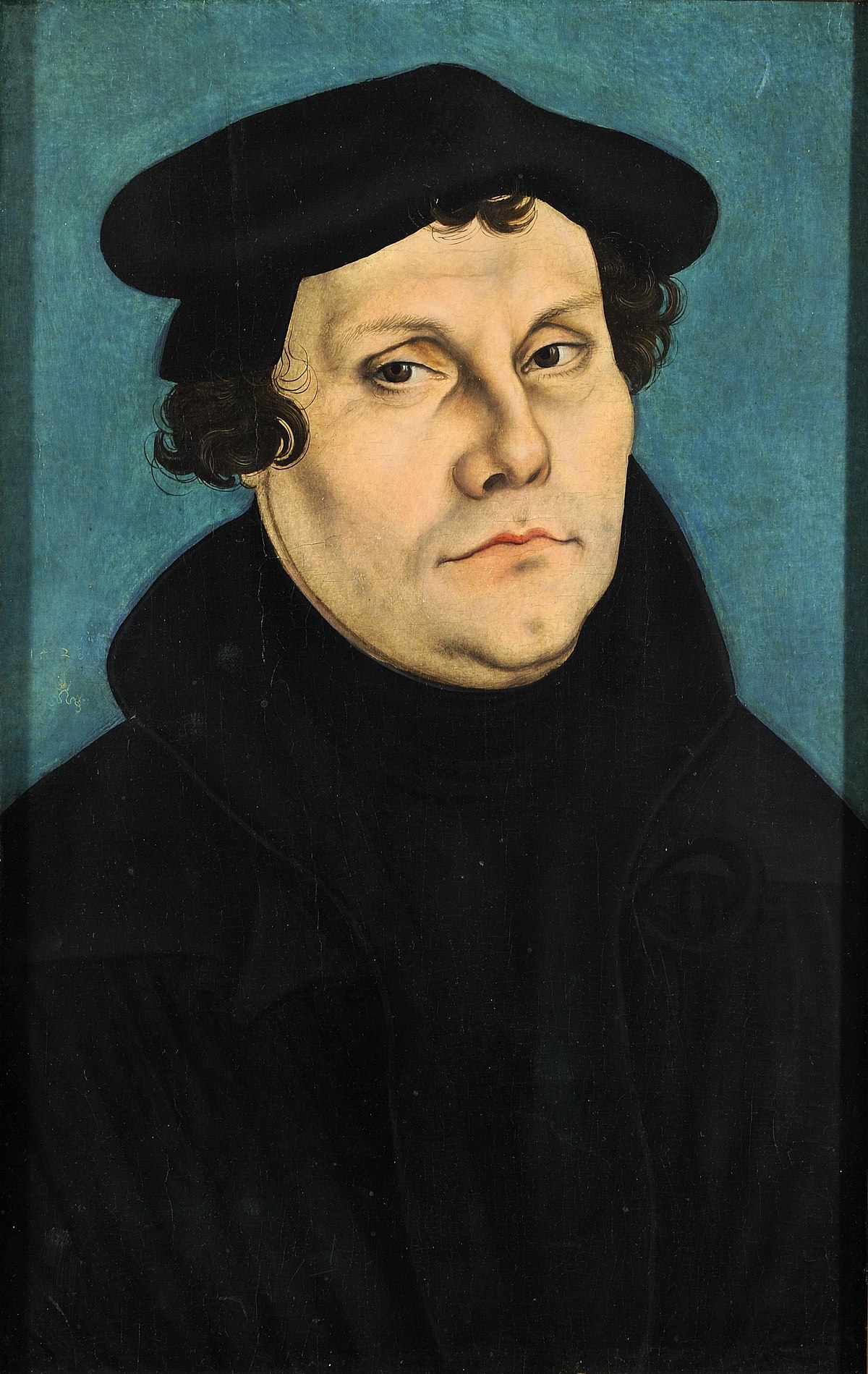 In the mid-1500’s, Martin Luther, a troubled Catholic monk, broke with the Church over what he rightfully saw as abuses. Luther claimed, and today people call his break the Reformation. This, however, is inaccurate, since Luther did not restore the Church to its previous state; he created a new theology that required him to remove certain passages from the Bible to align with his new “Protestant” theology.
Sola Fide (faith alone) and sola scriptura (Bible alone) are two central new theological developments Luther taught. Neither of these was taught until Luther came along. What Luther did was, in fact, start a revolution against the truth of the Gospel message.
It has been downhill ever since. People have claimed to have the authority to interpret scripture and that each individual can reach the correct conclusion when reading it on their own, without any authority being required. The results are obvious. You don’t need to be a theologian to understand that they all can’t be true. And more importantly, Christ prayed that his Church be one; he, of course, knew that men with their own pride would divide and fall away.
“And I have given them the glory you gave me, so that they may be one, as we are one” — John 17:22
This protestant theology, however, is completely illogical, since the Bible itself did fall out of the sky neatly bound up. The Canon of the Bible was established by the Catholic Church at the Council of Carthage in 397. This is a historical fact and not a matter of theological interpretation. Most, if not all, non-Catholic Christian denominations start with the Bible, the Bible Martin Luther gave them, which removed books. In other words, they go back to the 1500s; the Catholic Church, no matter what you think of it, goes back to the time of Christ, another historical fact.
What Jesus Did
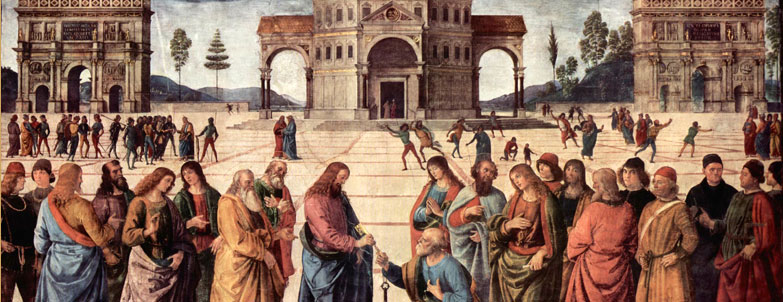 Jesus gave certain followers the authority to teach. The early Christians knew they could trust Peter’s teaching because he was one of Jesus’ apostles. The word apostle comes from the Greek word Apostolos, which denotes one who is sent as a messenger.
Early Christians recognized that the apostles were sent by Christ and endowed with the authority to teach in his name.
And so I say to you, you are Peter, and upon this rock I will build my church, and the gates of the netherworld shall not prevail against it. — Matthew 16:18
At the Last Supper, Jesus promised the apostles that the Father “will give you another Counselor, to be with you forever . . . the Holy Spirit, whom the Father will send in my name, he will teach you all things, and bring to your remembrance all that I have said to you. . . . He will guide you into all the truth” (John 14:16, 26; 16:13).
Before his ascension, Jesus instructed the apostles, “Go therefore and make disciples of all nations, baptizing them in the name of the Father and of the Son and of the Holy Spirit, teaching them to observe all that I have commanded you; and lo, I am with you always, to the close of the age” (Matt. 28:19–20).
Peter taught that “no prophecy of scripture is a matter of one’s own interpretation, because no prophecy ever came by the impulse of man, but men moved by the Holy Spirit spoke from God” (2 Pet. 1:20–21) and went on to warn about those who taught without authority: “There will be false teachers among you, who will secretly bring in destructive heresies, even denying the Master who bought them, bringing upon themselves swift destruction” (2 Pet. 2:1).
Paul instructed, “Stand firm and hold to the traditions which we taught you, either by word of mouth or by letter” (2 Thess. 2:15), and “If anyone refuses to obey what we say in this letter, note that man, and have nothing to do with him, that he may be ashamed. Do not look on him as an enemy, but warn him as a brother” (2 Thess. 3:14–15).
And in 2 Timothy Chapter 4, we read:
3 “For the time will come when men will not tolerate sound doctrine, but with itching ears, they will gather around themselves teachers to suit their own desires. 4 So they will turn their ears away from the truth and turn aside to myths.”
The real irony of “Bible alone” is that those who claim it heard it from someone else; it is not in the Bible. The Bible doesn’t even have a table of contents to tell followers which books should be included. The Catholic Church, guided by the Holy Spirit as Christ promised, gave us the Canon.
Why Catholic The Word
Catholic comes from the Greek katholikos, the combination of two words: kata- concerning, and holos- whole. Thus, concerning the whole. According to the Oxford Dictionary of English Etymology, the word catholic comes from a Greek word meaning “regarding the whole,” or more simply, “universal” or “general.” Universal derives from two Greek words: uni- (one) and vertere (to turn). In other words, a “one turning,” “revolving around one,” or “turned into one.”
Why the Catholic Church
The word church comes from the Greek ecclesia, which means “those called out,” as in those summoned out of the world at large to form a distinct society. The Catholic Church comprises those called out and gathered into the universal, visible society founded by Christ himself.
The word’s first recorded use is found very early in Christian literature. We find the first instance in the writings of St. Ignatius of Antioch, who was a young man during the apostolic period and the second bishop of Antioch after Peter. Ignatius was immersed in the living tradition of the local Church in Antioch, where the believers in Christ were first called Christians (Acts 11:26). He was alive early enough to have known the apostles and was taught and ordained directly by them.
Within a few short years of the Resurrection, the followers of Jesus began calling themselves “Christians” (Acts 11:26). By the end of the first century, the word “catholic”-meaning “universal”-was applied to the Church.
The idea of different (and sometimes competing) Christian denominations would have been unthinkable to the early Christians, especially in light of Christ’s pronouncement on one shepherd and one flock (John 10:15) and his prayer that his disciples remain one (John 17:22).
Only human weakness and sinfulness brought about the religious divisions that afflict Christianity today. The Orthodox Church drew apart from Rome intermittently over several hundred years, finally separating in the eleventh century.
The various Protestant denominations date back no earlier than the sixteenth century, when Martin Luther decided he didn’t like some church teachings, and King Henry VIII wanted to get divorced.
These churches can trace their roots back to Christ only through the Catholic Church. To put the matter rather bluntly: Why have anything else when you can have the real thing, especially when it comes to knowing and living the truths necessary for salvation?
Today, many denominations claim the Bible Alone as their rule of faith, ironically relying on the Catholic Church for its Canon. 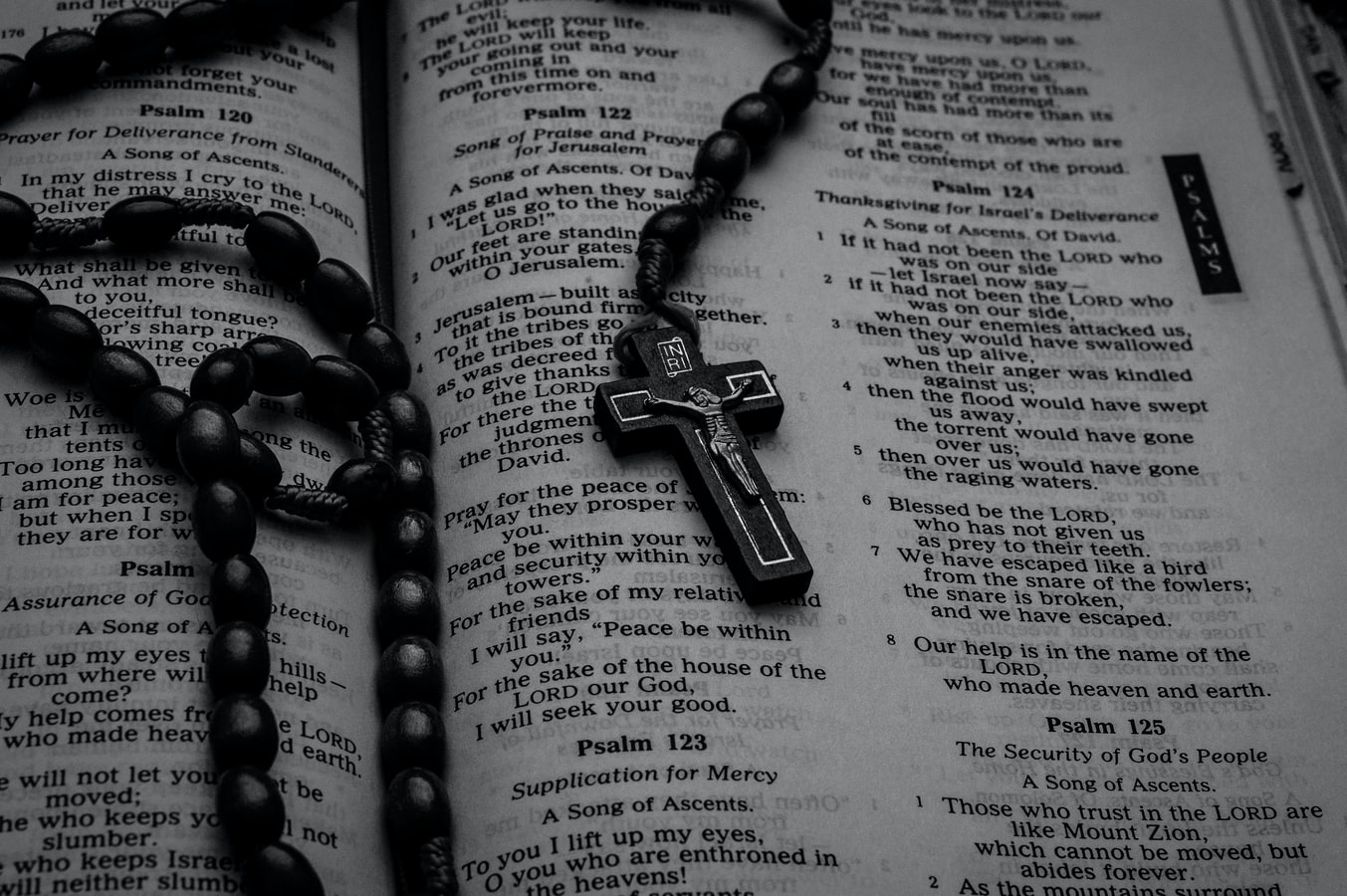
A brief review of scripture itself, what the early Christians and Fathers of the Church taught and believed, shows that Christ left One Apostolic Church
Find Out How Your Church Got Started
Dig Deeper-The One True God
Dig Deeper-What Does The Word Catholic Mean
You must be logged in to post a comment.