The Real History of Valentine’s Day: More Than Candy and Cards
We are all familiar with the modern Valentine’s Day: candy, cards, flowers, but few know the history of Valentine’s Day. Every February 14th, the world fills with roses, chocolate, heart-shaped boxes, and romantic dinners. Yet most people — even many Christians — don’t realize Valentine’s Day began as a feast honoring a Catholic martyr.
In fact, the holiday is not rooted in romance first… but in sacrifice. The modern celebration grew out of the life and death of a priest who defied the Roman Empire for the sake of Christian marriage.
Let’s uncover the real story.
Who Was Saint Valentine?
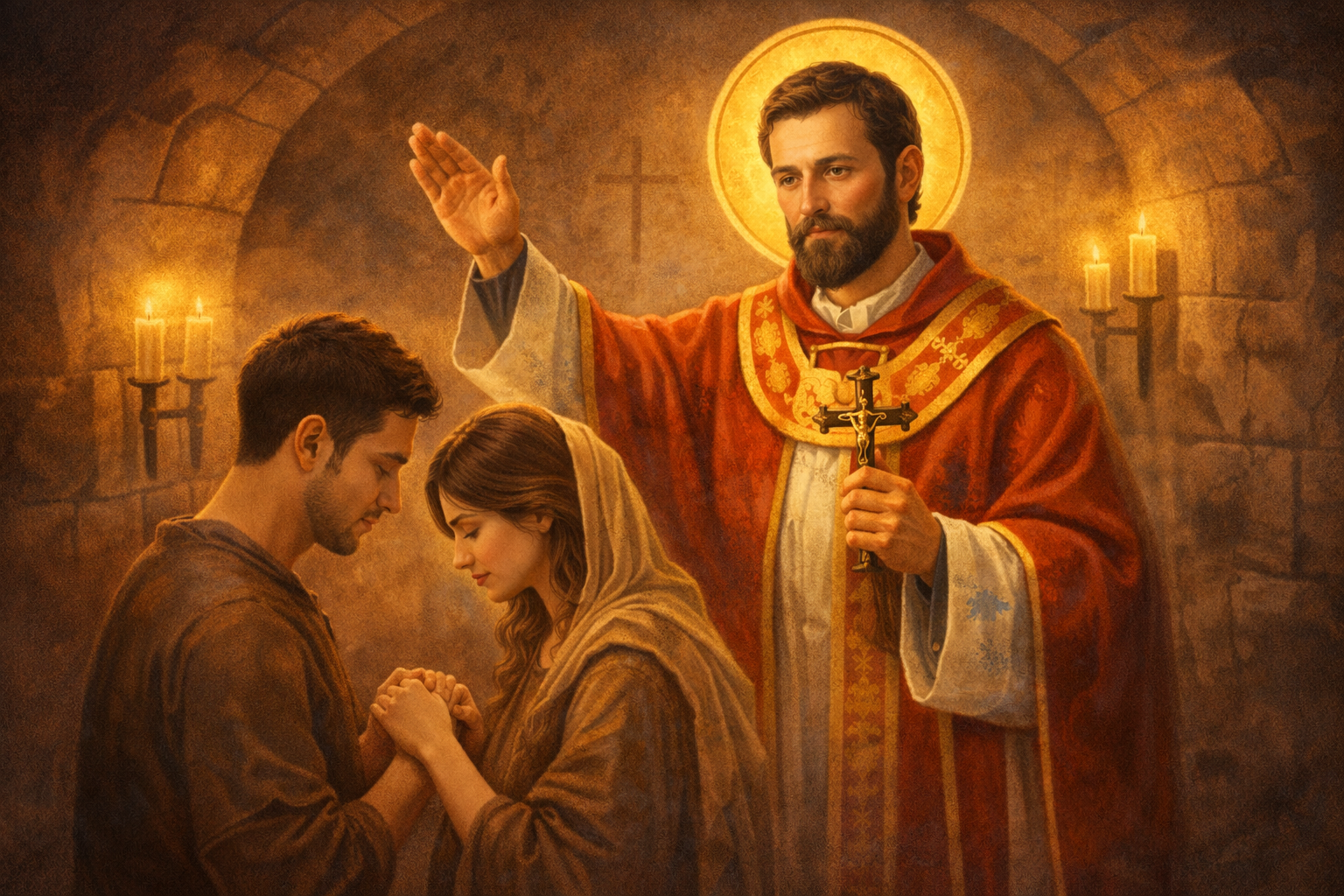
There were actually several early martyrs named Valentine, but the Church has traditionally associated February 14th with a Roman priest martyred around A.D. 269 under Emperor Claudius II. Claudius believed unmarried men made better soldiers. So he banned Christian marriages among young men.
Valentine disobeyed.
He secretly performed marriages for Christian couples.
Why? Because from the beginning Christianity taught something radically different from Roman culture: Marriage was not just a contract — it was sacred.
Valentine chose loyalty to Christ over loyalty to the state. He was arrested, imprisoned, and eventually executed. According to early Christian tradition, while imprisoned, he befriended the jailer’s daughter and left her a note signed:
“From your Valentine.”
That line would echo across history — but its original meaning was spiritual friendship, not commercial romance.
Was Valentine’s Day a Pagan Holiday?
You may have heard the claim that Valentine’s Day came from a Roman fertility festival called Lupercalia. This idea is popular online — but historians increasingly recognize it as speculative.
The early Church did not adopt Lupercalia and “Christianize” it. Instead, Christians replaced pagan celebrations with feasts honoring martyrs. The focus was remembrance, not fertility rituals.
By the 5th century, Pope Gelasius I formally established February 14 as the feast of Saint Valentine — honoring Christian witness, not pagan practice.
Later, in the Middle Ages, writers like Chaucer began associating the day with romantic love, especially courtship and virtue. Over centuries, the meaning shifted from sacrificial love to emotional affection.
The early Christians honored martyrs not because they died, but because they showed what love actually is.
The modern world often treats love as:
emotion
attraction
chemistry
compatibility
But the Christian understanding is different. Love is willing the good of the other — even at cost to yourself. Saint Valentine did not die for romance. He died because marriage reflects Christ’s covenant with His Church. He defended the dignity of the sacrament.
That is why the Church remembers him.
Why the Catholic Meaning Still Matters Today
Today, relationships often collapse under the weight of expectations. We look for constant feelings instead of faithful commitment. But Saint Valentine reminds us: Love is proven by sacrifice, not sentiment.
The world celebrates feelings on February 14th. The Church celebrates fidelity.
Marriage is not sustained by butterflies — it is sustained by grace.
The martyrdom of Saint Valentine quietly teaches a truth our culture desperately needs:
Real love survives suffering because it is rooted in God, not mood.
Recapture The History of Valentine’s Day
Instead of rejecting the holiday or treating it as commercial fluff, Catholics can reclaim it. At the same discover a better Way to celebrate Valentine’s Day
Consider celebrating by doing one or all five of these:
1 Praying together as a couple 2 Renewing wedding vows privately 3 Writing a letter of gratitude instead of buying a card 4 Attending Mass or Eucharistic Adoration 5 Performing an act of sacrificial love
That would be the most historically accurate way to celebrate. Because the first Valentine’s Day was not about romance. It was about a man who loved Christ enough to defend marriage — even unto death.
Women Delaying Motherhood: What Modern Culture Won’t Tell You About Meaning and Family
Women delaying motherhood is not just a private lifestyle trend—it is one of the most profound spiritual and cultural shifts of modern life. A satirical piece in The New Yorker imagines a fictional modern celebration: a “Decided-Not-to-Have-a-Baby Shower.” It’s presented as a cheerful ritual—smiling praise, exaggerated support, and comedic gifts—honoring the choice to remain childless.
It’s funny because it exaggerates what many people already feel: modern adults are pressured to explain themselves no matter what they choose. Have kids too soon, and you’re irresponsible. Wait too long, and people treat you as strange. Decide not to have them, and you must frame it as a brave personal identity. Satire reveals something our culture can’t say plainly:
Parenthood is no longer treated as a natural good—it is treated as an optional lifestyle accessory.
But Catholicism refuses to reduce family to lifestyle. Because Catholic theology begins with a different view of the human person.
The Human Person Is Not Made for Maximum Freedom—But for Love
Modern culture tells people:
“Keep your options open.” “Protect your independence.” “Prioritize yourself.” “Delay commitment.” “Build your career first.”
That message sounds like wisdom, but over time, it often becomes a prison. Catholic anthropology teaches something simple and unshakable:
You were made for self-gift.
Not for endless self-protection. Not for constant self-invention. Not for the pursuit of comfort as the highest goal.
You were made to give yourself away in love. And love cannot remain theoretical forever. Love must become a real commitment—embodied in responsibility, sacrifice, and fidelity.
Delaying Motherhood Often Begins Innocently… Then Becomes a Drift
Many women do not wake up and say, “I’m choosing loneliness.” They don’t choose emptiness. They often choose what seems reasonable:
Stability first. Security first. Career first. The right person first. Healing first.
But here is the reality the modern world refuses to say out loud: A woman’s fertility does not wait for cultural trends. Time passes quickly. Dating gets harder. Men and women become more guarded. The pool changes. People become less flexible. And sometimes, the dream of motherhood is postponed until it becomes uncertain or impossible. This is not about condemnation.
It is about truth. Because truth is mercy.
A Career Cannot Give What Family Gives
Catholicism is not anti-work. Catholic teaching honors labor, vocation, skill, competence, and building a life of excellence. But Catholic wisdom also tells the truth about work: Work is part of your life. It is not the purpose of your life. A career can provide structure and accomplishment. But it cannot provide what family provides: unconditional belonging, deep roots, and generational love. It cannot replace the spiritual formation that comes through serving someone other than yourself. Yes, a career can be meaningful. But a career cannot become a substitute savior.
The Hidden Cost of Modern Freedom
Modern freedom is often defined as: “No obligations.” But Catholic freedom is something very different: Freedom is the ability to choose the good—especially when it costs you something. The tragedy of the modern world is that many people spend their strongest years avoiding sacrifice, only to discover later that comfort is not the same thing as happiness.
The world offers us ease. But ease does not produce meaning. Meaning comes from love. And love always costs something.
Not Everyone Is Called to Parenthood—But Everyone Is Called to Fruitfulness
The Catholic view is not “everyone must have children.”
That’s a caricature.
The Catholic view is deeper: Every human life is called to fruitfulness.
For some, that fruitfulness is motherhood and fatherhood. For others, it’s marriage without children. For others, it is a religious vocation. For others, it is spiritual motherhood, mentorship, service, and building life-giving community.
But Catholicism insists on one point modern culture hates: You cannot live only for yourself and remain psychologically whole. Self-centeredness eventually collapses in on itself.
The Warning Our Culture Won’t Give Young Women
Modern culture encourages delay without telling the full truth about the cost. It says, “You have time,” but often means, “Don’t take love seriously yet.” It says, “Follow your dreams,” but often means, “Prioritize comfort over commitment.” It says, “You can always have kids later,” but conveniently ignores the reality that later is not guaranteed. This isn’t about guilt. This is about calling people back to reality before reality becomes regret.
Closing Thought: Choose With Eyes Open
If you are a young woman who hopes to be a wife and mother someday, do not let that desire be treated like an embarrassing weakness. The desire for family is not a defect. It is written into the human heart. And while satire makes us laugh, the real-life version is often sorrowful: A life filled with experiences but not rooted in love. A life filled with success but lacking a sense of belonging. A life that stayed “open” so long it never became “home.” Christ offers a better vision: Not comfort as the highest good, but love. Not endless autonomy, but communion. Not self-invention, but vocation.
Because the human person does not find peace by avoiding sacrifice. We find peace by giving ourselves away in love—and discovering that this is what we were made for.
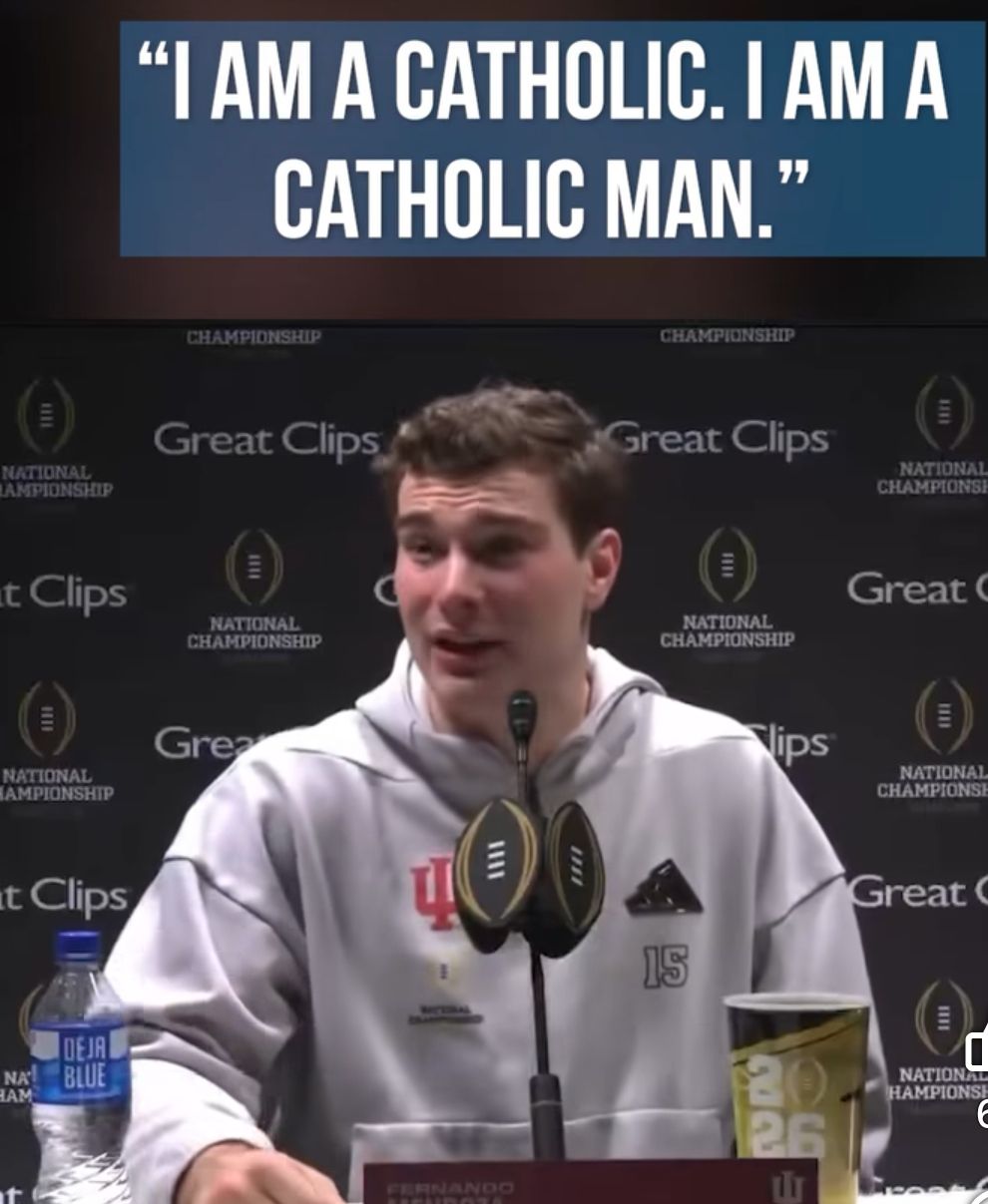
Catholic footballer Fernando Mendoza boldly declared, “I am a Catholic. I am a Catholic man.” He shared how the Sacrament of Confession and faithful attendance at Sunday Mass are vital to his Catholic life—strengthening his soul, guiding his choices, and grounding him as a true champion, on and off the field.
What It Takes to Be a Catholic Man: A “Brave Heart” According to Archbishop José H. Gomez
Be a Catholic man. A lot of modern talk about “manhood” is either sentimental (“just be nice”) or theatrical (“be a savage”). Neither one is a solid foundation for a life, a marriage, a family, or a faith.
Yes, the book is written with priests in view. But the core claim translates cleanly to every Catholic man because courage is not a “career virtue.” It’s the backbone of faithful Christian living.
1) A Catholic man rejects the counterfeit “macho” definition of masculinity
Gomez confronts a cultural confusion: we often confuse manliness with brute strength, rugged independence, and sexual aggression.
In a passage quoted from Men of Brave Heart, he writes:
“Manliness” is still largely equated with a brute strength, a rugged independence from others, and an aggressive sexuality… If we were to look at the tragic crisis of fatherhood and commitment in our society, we would see even more deeply how flawed our models of manhood have become.
That’s a direct challenge to the modern “prove yourself” mindset. Catholic manhood isn’t performative. It’s purposeful.
2) A Catholic man lives fortitude: love that can sacrifice
Courage, in the Christian tradition, isn’t adrenaline or reckless risk-taking. It’s stable strength—the ability to endure hardship for the sake of the good.
One of the best lines in the material citing Gomez’s theme puts it plainly: love is meant to be self-giving, and fortitude is what makes self-giving possible—especially when it hurts.
In real life, that looks like:
telling the truth when it would be easier to spin
staying faithful when temptation offers “an exit ramp”
being patient when you’d rather withdraw or explode
doing the next right thing when you feel tired, unseen, or disrespected
A Catholic man becomes dependable—not because life is easy, but because his backbone is formed by virtue.
3) A Catholic man stands firm in faith when the world pushes back
Gomez emphasizes that living the faith fully takes courage. It is not for the faint of heart, because there will always be pressure—social, sexual, professional, ideological—to treat faith like a private hobby.
In the same Father’s Day-themed text that quotes Gomez, the argument is explicit: a man must be courageous to stand firm in his faith amid attacks and ridicule.
Catholic manhood isn’t “going along to get along.” It’s living a unified life—faith not as a weekend accessory, but as the organizing center.
4) A Catholic man becomes a protector (not a controller)
In the Catholic moral imagination, protection is not domination. It’s responsibility.
Protection means:
guarding your home from what corrodes it (porn, contempt, addictions, chaos)
guarding your marriage from “little betrayals” (lies, secrets, emotional affairs, scorekeeping)
guarding your children’s moral formation (not outsourcing everything to screens and trends)
guarding your integrity when nobody is watching
That kind of protection requires courage—not the courage of the loud man, but the courage of the steady man.
5) A Catholic man chooses holiness over comfort
The blunt truth is that comfort makes cowards out of all of us.
Christian life—whether priestly, married, or single—demands a willingness to suffer for the good. Even the brief synopsis of the book frames it this way: perseverance in faith, closeness to suffering, and the need for “a courageous heart.”
Catholic manhood is the decision to be ruled by God instead of appetite, impulse, reputation, or fear.
A simple “brave heart” examination for Catholic men
If you want to boil this down to something practical, try these five weekly questions:
Where am I avoiding a hard good because I prefer an easy comfort?
Where am I performing “manliness” instead of living virtue?
Where do I need fortitude to love well—especially at home?
Where am I tempted to keep my faith “private” to avoid tension?
What would change this week if I acted like holiness—not comfort—was the goal?
Closing: Catholic manhood is courage with a purpose
Archbishop Gomez’s message (and the tradition behind it) is not complicated:
A Catholic man is not defined by swagger. He is defined by fortitude—the courage to pursue the good, endure suffering, and remain faithful in love and in truth.
That’s what it takes to be a Catholic man: a brave heart.
Marxism and Christianity cannot coexist because Christian theology—with its idea of a fixed human nature—infuriated Marx, who was not merely an atheist but an open enemy of religion, famously dismissing it as “the opium of the people.” His disciples, led by Vladimir Lenin, consistently targeted the Church whenever they seized power. Churches were closed, clergy imprisoned or executed, and religious life systematically dismantled. These acts were not distortions of Marxism; they were its logical consequences.
Marxism cannot coexist with Christianity because Christianity asserts something Marxism must deny: an objective source of truth and meaning outside the state. As long as people believe they are created rather than constructed—accountable to God rather than ideology—total revolution remains impossible.
God places a ceiling over power. Marxism seeks a world with no ceilings.
Why Christianity Is the Real Obstacle
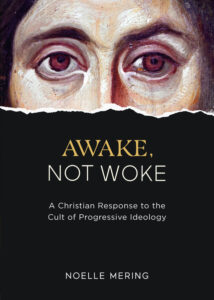
In Awake, Not Woke: A Christian Response to the Cult of Progressive Ideology, Noelle Mering argues that modern progressive ideology functions less like a political platform and more like a rival religion. It offers moral claims, purity codes, heresies, rituals, and excommunications—but without transcendence.
Christianity teaches:
Truth exists independent of power
Human nature is real and ordered
Meaning is received, not invented
Progressive ideology, by contrast, treats these claims as threats. If truth exists outside consensus, it cannot be rewritten. If human nature is fixed, it cannot be endlessly reconstructed. If God exists, the state cannot be ultimate.
Mering observes that this ideology does not simply reject Christianity—it seeks to replace it, offering salvation narratives stripped of grace and moral absolutes without God.
When Marxism Failed Economically
Classical Marxism predicted that workers crushed by material conditions would rise up against the bourgeoisie. But in the West, this uprising largely failed. Workers did not primarily interpret their lives through the lens of class struggle. They identified as fathers and mothers, believers, citizens, and moral agents.
Marxist theorists were forced to confront an inconvenient truth: culture mattered more than economics. Family, faith, tradition, and moral norms anchored people so deeply that they could not revolt.
So Marxism adapted.
The Shift from Revolution to Cultural Subversion
Thinkers such as Antonio Gramsci and later figures associated with the Frankfurt School concluded that power was sustained not merely by laws or force, but by cultural institutions that shape meaning—schools, churches, language, morality, and family structures.
Rather than seizing factories, the new strategy focused on undermining the institutions that transmit values across generations. This marked the shift from economic revolution to cultural transformation.
As Mering notes, once moral authority is destabilized, people no longer know what to appeal to beyond emotion, identity, or power.
Removing God Removes the Compass
The central aim of this cultural strategy is not simply secularization, but the elimination of objective reference points. God is not removed because He is false, but because He is limiting.
Without God:
Morality becomes negotiable
Identity becomes fluid
Meaning becomes political
Power becomes truth
Mering argues that modern ideology thrives on this instability. When nothing is fixed, everything is contestable—and those who control institutions control reality.
This explains why Christianity remains a target even when it poses no political threat. Its crime is metaphysical: it insists that reality is not infinitely malleable.
Critical Theory and the Deconstruction of Meaning
Critical Theory, as developed in the twentieth century, did not primarily aim to discover truth but to destabilize inherited structures. Religion, family, tradition, and even reason itself were treated as tools of domination rather than sources of wisdom.
The result is a culture in which:
Language is moralized
Disagreement is pathologized
Dissent is framed as harm
Mering observes that when truth is severed from transcendence, disagreement becomes intolerable. Without God, there is no neutral ground—only competing moral absolutes enforced by power.
The Endgame: A World Without Meaning
Early Marxist regimes relied on brute force—imprisonment, executions, propaganda—to eliminate religion. Cultural Marxism relies more on education, media, institutional pressure, and social penalties. The tactics differ, but the goal remains the same.
A society without God is a society without a compass.
Christianity insists that freedom depends on truth, and truth depends on something outside the regime. That is why Marxism—whether economic or cultural—must always wage war on the sacred. As long as God remains, ideology can never entirely rule.
Nominalism: Not the Cause, but the Open Door
It is essential to be precise. Nominalism did not cause cultural Marxism, nor is it responsible for twentieth-century ideological movements. However, nominalism did weaken the philosophical and theological foundations that once protected Western culture from such movements.
Nominalism, most often associated with William of Ockham, denies that universals—such as human nature, truth, or the good—exist as real features of reality. In this view, universals are merely names (nomina) we assign to individual things, not realities that exist independently of the mind.¹
This represents a decisive break from the classical Christian realism preserved by the Catholic Church, especially through the thought of Thomas Aquinas. In the Catholic tradition, universals are real, intelligible, and grounded in creation itself. Human nature is not invented—it is received. Truth is not constructed—it is discovered.²
As Aquinas famously defined it, truth is the “adequation of the intellect to reality” (adaequatio rei et intellectus).³ Meaning precedes power.
Nominalism subtly reverses this order.
From Meaning to Will, From Truth to Power
Once universals are denied, truth no longer refers to what is, but to what is asserted, defined, or willed. Over time, this shift places greater emphasis on will over reason, and power over participation in reality.
This philosophical turn matters because modern ideological systems—including cultural Marxism—depend on precisely this instability. They thrive in a world where:
Human nature is denied or endlessly redefined
Meaning is fluid and negotiable
Language creates reality rather than describes it
Nominalism does not lead inevitably to Marxism, but it erodes confidence in objective meaning, leaving societies more vulnerable to ideologies that claim reality itself is socially constructed.
As Catholic philosopher Étienne Gilson notes, once metaphysics is abandoned, ethics and politics quickly lose their grounding.⁴ What remains is will—either individual or collective.
Why Catholic Christianity Resists Ideology More Effectively
This helps explain why Marxist and post-Marxist ideologies consistently clash more sharply with Catholic Christianity than with more nominalist or voluntarist forms of theology.
Catholic Christianity insists that:
Nature precedes grace, and grace perfects nature
Human nature is intelligible and morally ordered
Freedom is ordered toward truth, not self-creation
As Noelle Mering argues in Awake, Not Woke: A Christian Response to the Cult of Progressive Ideology, modern ideology depends on the denial of givenness—givenness of sex, meaning, moral order, and ultimately of God.⁵ Catholic theology resists this because it affirms that reality is not plastic.
Ideologies that depend on reshaping identity, redefining morality, or reconstructing reality itself cannot fully succeed where human nature is understood as real and knowable.
Nominalism does not cause cultural Marxism—but it removes a crucial philosophical firewall that once prevented meaning from collapsing into power.
The Larger Picture
Cultural Marxism did not arise from medieval philosophers’ debates over universals. It arose because modern man increasingly forgot how to speak coherently about truth, nature, and meaning as realities independent of will.
Nominalism weakens that language. Critical Theory exploits the weakness. Christianity—especially in its Catholic form—stands in the way.
That is why modern ideological movements do not merely reject God. They must reject nature, truth, and reason itself. And that is precisely what the Catholic intellectual tradition refuses to surrender.
References
Awake, Not Woke: A Christian Response to the Cult of Progressive Ideology, Noelle Mering
Karl Marx, A Contribution to the Critique of Hegel’s Philosophy of Right
Antonio Gramsci, Selections from the Prison Notebooks
Max Horkheimer, Eclipse of Reason
Theodor Adorno, The Authoritarian Personality
“The Birth of Cultural Marxism: How the Frankfurt School Changed America,” ZeroHedge (2016)
William of Ockham, Summa Logicae, I.14–15.
Thomas Aquinas, Summa Theologiae, I, qq. 84–85.
Thomas Aquinas, De Veritate, q. 1, a. 1.
Étienne Gilson, The Unity of Philosophical Experience.
Are you helping the poor? In a 2018 New York Times article, the author Paul Sullivan notes that “red counties, which are overwhelmingly Republican, tend to report higher charitable contributions than Democratic-dominated blue counties, according to a new study on giving, although giving in blue counties is often bolstered by a combination of charitable donations and higher taxes.” Sullivan’s writing followed another New York Times article in 2008 in which liberal writer Nicholas Kristof challenged his fellow liberals to step up. In his article Bleeding Heart Tightwads, Kristof wrote:
Liberals show tremendous compassion in pushing for generous government spending to help the neediest people at home and abroad. Yet when it comes to individual contributions to charitable causes, liberals are cheapskates.
Both Sullivan and Kristof note that Republicans tend to be more religious. Therefore, much of their giving goes to churches; they often provide for the collective good through private institutions. They are often mocked by their liberal cohorts, who view helping the poor as a central government’s vital role. They contend that by not voting for increased government spending on the poor, they are hypocrites—they are not real Christians.
When it comes to evidence of such hypocrisy, they rely on biblical passages such as the Gospel of Matthew, Chapter 25
35 For I was hungry and you gave me food, I was thirsty and you gave me drink, a stranger and you welcomed me, 36 naked and you clothed me, ill and you cared for me, in prison and you visited me.
Whether it is from Matthew or other passages, the liberal argues that the Bible should compel Christians to support increased taxes to help the poor. During the 2016 Democratic presidential debate, South Bend Mayor Pete Buttigieg invoked Proverbs 14:31 as proof that “the minimum wage is just too low.” He noted that “so-called conservative Christian senators right now in the Senate are blocking a bill to raise the minimum wage when Scripture says that ‘whoever oppresses the poor taunts their Maker.” The passage, of course, says nothing about establishing a minimum wage. It is addressing taking advantage of the worker.
This is in line with other Old Testament writings such as Exodus 23:3, “You shall not show partiality to a poor man in his dispute.” and Deuteronomy 24:14-15, “each day you shall give him his wages.” Buttigieg would have a better argument that the Bible instructs wages to be paid daily rather than weekly than he does that the passage means an arbitrary minimum wage to be set by the government.
Another passage often invoked during political discussion comes from Matthew 22:21, when Jesus tells the Pharisees and Herodians to “render unto Caesar the things that are Caesar’s and to God the things that are God’s.” he sets the framework for how we should think about religion and the state even today. The 1994 Catechism instructs the faithful that it is morally obligatory to pay one’s taxes for the common good. The definition of the “common good,” however, is and will always be debated.
The Catholic social teaching principle of subsidiarity, the idea that a central authority should have a subsidiary function, performing only those tasks that cannot be performed effectively at a more immediate or local level, is an important principle to keep in mind in such a debate. Practical wisdom and empirical evidence tell us that the best help comes from the local level. Who knows better what your brother needs than you? Centralized bureaucracies must be constructed that serve the lowest common denominator and cannot consider each individual’s highly unique needs. This makes them highly inefficient.
Moreover, Jesus was not speaking only of the poor in economic terms, but also of the poor in spirit. Many people are alone and have struggles that are not financial. The government can not visit those in prison. People often need more than a check to show up each week; they need to know someone cares. Giving of yourself shows compassion and can provide love and hope well beyond any official state currency. It also brings you closer to God. In Matthew 25:40, Jesus says, Whatever you did for one of these least brothers of mine, you did for me.”
Obviously, the government has a role to play in helping the needy. It also has many indispensable functions to perform, which cannot be accomplished by individuals acting alone. Historically, the government has recognized the role that private institutions can and should play in helping their communities; this is why Churches and other nonprofits exist. However, the flip side of subsidiarity is that the Christian has a personal responsibility to help the poor economically and in spirit.
As the government increases its role the individual feels a sense of personal responsibility has been lifted. The person who voted for the politician who promised to do more for the poor mistakenly feels he has met his obligation. This is why, as studies have shown, when the government increases taxes, the individual gives less. Relying on the government to help the needy outsourcesour personal moral responsibility.
There is, however, no example of Jesus telling his followers to take from those who aren’t Christians and give to the poor. Nowhere is it written that helping the poor should be at the hands of elected government bureaucrats. He is telling Christians to do it. All people are called to make the common good a greater reality, relying on the government alone ignores another Catholic social teaching, solidarity. As Pope John Paul II wrote in Sollicitudo Rei Socialis 38, solidarity is not a “feeling of vague compassion or shallow distress at the misfortunes of so many people, both near and far. On the contrary, it is a firm and persevering determination to commit oneself to the common good; that is to say, to the good of all and each individual. We are all really responsible for all. ”
We can help in many ways beyond monetary donations by volunteering our time and services and by praying conscientiously for those in need. There is always something we can do, even if we cannot afford to donate money. What is essential is to do what we can. When we encounter those in need face-to-face, we encounter Christ. When we outsource our personal responsibility, we avoid meeting Christ.
Mary the Ark of the New Covenant: A Biblical and Historical Explanation
For many Christians, the title “Mary the Ark of the New Covenant” sounds poetic or symbolic. Yet Scripture, history, and typology reveal that this is far more than a devotional metaphor. The early Church recognized Mary as the new and greater Ark— the very vessel through whom God chose to dwell among His people.
Understanding this helps Christians appreciate Mary not instead of Christ, but because of Christ. The Ark points to the presence of God; Mary points to the God she bore.
What Was the Ark of the Covenant and Why Was It Central to Israel?
In the Old Testament, the Ark of the Covenant was the holiest object in Israel’s worship. Made of acacia wood and overlaid with gold (Exodus 25:10–22), the Ark represented God’s presence dwelling with His people.
Inside the Ark were (Hebrews 9:4):
The stone tablets of the Law — God’s Word
The golden jar of manna — God’s heavenly bread
Aaron’s priestly rod — the symbol of the high priesthood
Where the Ark went, God’s glory followed. When the Ark entered Jerusalem, King David danced before it (2 Samuel 6:14). When the Ark overshadowed the Tabernacle, God’s glory filled the sanctuary (Exodus 40:34–35).
The Ark was holy not because of the wood or gold, but because of what it carried.
The Annunciation: Scripture Presents Mary in Ark Language
In Luke’s Gospel, the angel Gabriel tells Mary:
“The Holy Spirit will come upon you, and the power of the Most High will overshadow you.” — Luke 1:35
The Greek word for “overshadow” (episkiasei) is used in the Greek Old Testament to describe God’s presence overshadowing the Ark (Exodus 40:35). This is deliberate typology.
Luke is signaling to readers familiar with Scripture: God’s glory cloud is overshadowing a new Ark—Mary.
H2: Parallels Between the Old Ark and Mary in Luke’s Visitation
Luke deepens the connection between Mary and the Ark through a series of intentional parallels:
Old Ark of the Covenant
Mary, Ark of the New Covenant
David leaps before the Ark (2 Sam 6:14–16)
John the Baptist leaps in Elizabeth’s womb when Mary arrives (Luke 1:41)
David says, “How can the Ark of the Lord come to me?” (2 Sam 6:9)
Elizabeth says, “And how does this happen to me, that the mother of my Lord should come to me?” (Luke 1:43)
The Ark remains in the hill country for three months (2 Sam 6:11)
Mary remains in the hill country of Judah for three months (Luke 1:56)
No serious biblical scholar considers this accidental. Luke—steeped in Old Testament imagery—intends for Christians to make the connection.
Mary Bears What the Old Ark Could Only Symbolize
Just as the original Ark carried signs of God’s covenant, Mary carries their fulfillment:
The Ark held the Word of God written on stone; Mary bears the Word made flesh (John 1:14).
The Ark held the manna; Mary bears Jesus, the true Bread from Heaven (John 6:51).
The Ark held Aaron’s priestly rod; Mary bears Jesus, the eternal High Priest (Hebrews 4:14).
Everything the Ark foreshadowed, Mary fulfills in reality.
Revelation 11–12: The Ark Appears and It Is a Woman
John’s vision in Revelation offers one more striking confirmation:
“God’s temple in heaven was opened, and the Ark of His Covenant was seen…” — Revelation 11:19
Immediately, the vision continues:
“A woman clothed with the sun… and she brought forth a male child who is to rule all the nations.” — Revelation 12:1–5
There were no chapter breaks in the original text. John sees the Ark—and then describes a woman who gives birth to the Messiah.
Early Christians saw this clearly: the Ark of the Covenant is not an object but a person—Mary.
Early Church Fathers on Mary the Ark of the New Covenant
The earliest Christians, long before medieval Marian devotion, understood Mary in this way.
St. Athanasius (4th century):
“O noble Virgin, truly you are greater than any other greatness… you are the Ark in which is found the golden vessel containing true manna.”
St. Gregory Thaumaturgus (3rd century):
“The holy Virgin, the true Ark, brought forth the Christ.”
St. Ambrose (4th century):
“The Ark was made of incorruptible wood… Mary is the Ark in whom was found the gold that covered the Law.”
This teaching is both ancient and universal.
Why Recognizing Mary as the Ark of the New Covenant Matters
Seeing Mary as the Ark of the New Covenant is not about exaggerating Mary’s place. It is about:
Understanding Christ’s identity
Understanding the Incarnation
Understanding Scripture’s unity
Understanding why early Christians honored Mary
Catholics do not worship the Ark—old or new. But the Ark is honored because God dwells within it. Honoring Mary always leads us to honor the One she carried.
Conclusion — The Ark Magnifies the Presence of God
Mary is the Ark of the New Covenant because God chose her as the vessel through which He entered the world. The Old Covenant Ark carried symbols of God’s presence; Mary carried God Himself.
The more we understand Mary as the Ark, the more we understand Christ and the glory of the Incarnation.
Bakit Mali ang Great Apostasy Claim ng Iglesia ni Cristo
Ang Iglesia ni Cristo (INC), na naitayo ni Felix Manalo noong 1914, ay nagtuturo na ang Iglesia na itinatag ni Jesus ay nawala, nag-fall away, at kinailangang i-restore ni Manalo. Ito ang tinatawag nilang Great Apostasy claim—ang paniniwalang bumagsak ang buong Church pagkatapos ng panahon ng Apostles.
Pero kung titignan natin ang Bible, history, at early Christian writings, hindi ito puwedeng mangyari. Jesus Himself promised na hindi mawawala ang Church. He promised na He would stay with it until the end of the age. He promised the Holy Spirit would guide it into all truth.
Kung ganoon, paano nag-declare ang INC na “nawala” ang Church for 1,900 years at bumalik lang noong 1914 sa Pilipinas sa pamamagitan ng isang tao?
The only conclusion: the Great Apostasy claim is impossible.
Christ’s Promises Contradict INC’s Great Apostasy Claim
Para maging tama ang INC, kailangan nating paniwalaan na mali si Jesus. Pero malinaw ang sinabi ni Cristo.
Jesus Built One Church — and It Will Not Fall
Matthew 16:18
“You are Peter, and on this rock I will build my Church, and the gates of hell shall not prevail against it.”
Kung nag-fall away ang Church, ibig sabihin nag-prevail ang hell—na hindi puwedeng mangyari.
Jesus Remains With His Church Forever
Matthew 28:20
“And behold, I am with you always, to the close of the age.”
Hindi sinabi ni Jesus, “I am with you… until the year 100 AD. Then bahala na kayo until 1914.”
The Holy Spirit Protects the Church From Error
John 16:13
“When the Spirit of truth comes, He will guide you into all truth.”
So alin ang tama?
Si Jesus at ang Holy Spirit?
O si Manalo?
The answer is obvious.
Why INC Depends on the Great Apostasy Claim
Ayon sa Catholic Answers tract What is Iglesia ni Cristo?, ang buong doktrina ng INC ay nakatayo sa isang bagay:
Kailangan nilang patunayan na nag-fall away ang early Church.
Kung hindi, walang dahilan para magkaroon ng Iglesia ni Cristo.
Kaya tinuturo nila na:
The early Christians were wrong
Church Fathers were wrong
All bishops were wrong
All councils were wrong
All Christians for 19 centuries were wrong
…pero si Felix Manalo ang tama.
Exactly the same pattern ng:
Joseph Smith (Mormons)
Charles Taze Russell (Jehovah’s Witnesses)
Lahat sila may “restoration” claim. Lahat sila kailangan munang pabagsakin ang Catholic Church para maitayo ang kanila.
Why Iglesia ni Cristo Is Particularly Troubling
Sa Catholic Answers article Into the Maw of the Cult, kitang-kita na ang INC ay hindi lang another restorationist group. They behave like a high-pressure, anti-Catholic, tightly controlled sect.
Ilan sa observations:
dumadating by the busload
may ushers in black suits checking names
very intimidating atmosphere
coordinated attempts to attack Catholic speakers
members discouraged from reading outside materials
aggressive political and legal tactics
Kung babasahin mo rin ang Sects and Sin in Manila, documented ang:
pressure sa members
anti-Catholic propaganda
loyalty enforcement
political influence
legal intimidation
This is not the behavior of the Church Jesus founded.
This is the behavior of a group na kailangang kontrolin ang members para hindi ma-expose sa outside information.
Scripture’s “Boat” Symbol Refutes INC’s Claim
Sa Bible, ang boat ay simbolo ng Church.
When sailors tried to escape the ship:
Acts 27:31
“Unless these men stay in the ship, you cannot be saved.”
Sa early Church Fathers, ang boat of Peter = the Church. Ganito rin sa Noah’s Ark (Genesis 7). Lahat ng naligtas, nasa loob ng ark.
Ang Iglesia ni Cristo ngayon ay basically sinasabi:
“Huwag kayo sa ark ni Christ. Lipat kayo sa bangkang ginawa namin noong 1914.”
Bakit tayo lalabas sa barko ni Cristo para sumakay sa bagong gawa?
Scripture Warns of People Falling Away—Not the Church
INC claims the Church fell away. The Bible says people fall away.
2 Timothy 4:3–4
“Having itching ears… they will turn away from the truth and wander into myths.”
Hindi sinasabi ni Paul:
“The Church will disappear,”
“The Church will collapse,”
“A new church will rise in the Philippines.”
Sabi niya: mga tao ang bibitaw, hindi ang Church.
The Catechism agrees:
CCC 2089
“Apostasy is the total repudiation of the Christian faith.”
Apostasy = ginagawa ng tao, hindi ng Church na pinangako ni Cristo.
Restorationist Groups All Depend on the Same Claim
Group
Founder
Apostasy Claim
Restoration
Iglesia ni Cristo
Felix Manalo
Church died early
Restored in 1914
Mormons
Joseph Smith
Church vanished
Restored 1830
Jehovah’s Witnesses
Charles Russell
Doctrine corrupted
Restored 1870s
Pero wala ni isa sa kanila ang may:
historical evidence
apostolic succession
continuity of worship
biblical support
Conclusion: Christ, Not Manalo, Guards His Church
The Great Apostasy claim of Iglesia ni Cristo fails because:
Jesus promised His Church would never fall.
Jesus promised to stay with it forever.
The Holy Spirit protects it from error.
Scripture warns about individuals, not the Church, falling away.
History shows continuous leadership from the apostles.
INC depends on contradicting Jesus Himself.
INC’s behavior is controlling, anti-Catholic, and un-Christlike.
Ang pinakaligtas na lugar ay kung saan tayo dinala ni Cristo:
Stay in the Boat. Stay in the Church Christ Founded.
Why the Great Apostasy Claim of Iglesia ni Cristo Fails
Iglesia ni Cristo (INC), founded by Felix Manalo in 1914, teaches that the Church established by Jesus Christ fell into total apostasy shortly after the time of the apostles and therefore needed to be restored by Manalo. This Great Apostasy claim is the foundation of INC theology and the justification for its existence.
But this claim collapses under the weight of Scripture, history, and reason. Christ promised that His Church would never be destroyed, never be overcome, and never cease to exist. He promised to remain with it until the end of the age. He promised that the Holy Spirit would guard it from error.
To claim that the Church disappeared for 1,900 years and re-emerged in the Philippines under a single man is to deny the very words of Christ.
Catholic Answers—through its references What is Iglesia ni Cristo?, Into the Maw of the Cult, and Sects and Sin in Manila—offers extensive analysis of INC’s history, theology, and tactics. Drawing on that research, along with Scripture and the Catechism, the truth becomes unmistakable: the Great Apostasy claim is impossible.
Christ’s Promises Directly Contradict INC’s Great Apostasy Claim
INC teaches that the Church died out early and needed restoration. But Jesus teaches the opposite.
Christ Built One Church and It Will Not Fall
Matthew 16:18
“You are Peter, and on this rock I will build my Church, and the gates of hell shall not prevail against it.”
For INC’s Great Apostasy claim to be true, Christ’s promise must be false. Either the gates of hell did prevail—or Jesus was telling the truth.
Christ Promised to Remain With His Church Until the End of Time
Matthew 28:20
“And behold, I am with you always, to the close of the age.”
Christ does not abandon His Church for nineteen centuries only to restart it in 1914 under a former Catholic-turned-Protestant-turned-founder.
The Holy Spirit Protects the Church From Error
John 16:13
“When the Spirit of truth comes, He will guide you into all truth.”
If the Church vanished, then either:
The Holy Spirit failed,
Christ’s promise failed,
Or INC is wrong.
Scripture leaves only one rational conclusion.
Iglesia ni Cristo Depends Entirely on the Great Apostasy Claim
At an apologetics event in Southern California, the author witnessed:
members arriving by the busload
suited ushers checking names
a hostile, tense atmosphere
coordinated attempts to corner Catholic speakers
Rather than focusing on proclaiming Christ, INC’s energy seemed directed overwhelmingly toward attacking the Catholic Church, often with misinformation and aggressive tactics. The ministry’s structure, according to the article, resembles a rigid system in which members are discouraged from reading outside material and where loyalty to the organization is emphasized over the pursuit of truth. This illustrates how the Great Apostasy claim is not merely a doctrinal error, but can also become a mechanism of psychological, spiritual, and social control—a stark contrast to the freedom Christ promises in His Church (John 8:32).
Iglesia ni Cristo hates the Catholic Church and attacks its teachings whenever the chance presents itself. Each issue of Pasugo is crammed with articles showing how “unbiblical” the Catholic Church is for teaching doctrines such as the Trinity, the divinity and Incarnation of Christ, the Mass, and purgatory. “Sects and Sin in Manila” further documents INC’s history of:
political pressure,
legal intimidation,
anti-Catholic propaganda, and
fear-based enforcement inside the community.
This is not the behavior of the Church Jesus Christ established. It is the behavior of a sect that depends on keeping its members from examining outside evidence.
Scripture’s “Boat” Imagery Refutes INC’s Great Apostasy Claim
Scripture uses the image of the boat as a symbol of the Church.
During a storm, sailors tried to escape by abandoning the ship. Paul warned:
Acts 27:31
“Unless these men stay in the ship, you cannot be saved.”
Early Christians unanimously recognized the boat as a symbol of:
the Church,
the unity of believers, and
Salvation is found only within Christ’s body.
Likewise:
Noah’s Ark (Genesis 7) prefigures the Church.
Peter’s boat is the vessel from which Christ preaches (Luke 5).
Leaving the Church is equivalent to jumping overboard. INC asks Christians to abandon the ship Christ built and climb into a boat launched in 1914 by one man.
Scripture Warns of Individual Apostasy—Not the Church Collapsing
INC claims the entire Church fell away. The Bible says something very different.
2 Timothy 4:3–4
“People…having itching ears will accumulate for themselves teachers to suit their passions, and will turn away from listening to the truth.”
Scripture warns:
individuals will fall,
groups will break away,
false teachers will arise,
But never that the Church itself will disappear.
The Catechism confirms:
CCC 2089
“Apostasy is the total repudiation of the Christian faith.”
Apostasy is committed by individuals, not the Church Christ protects.
Sidebar: Comparing the Great Apostasy Claims of Restorationist Sects
Group
Founder
Apostasy Claim
Restoration Claim
Iglesia ni Cristo
Felix Manalo
Church died after early centuries
Manalo restored it in 1914
Mormons
Joseph Smith
Church vanished after apostles
Smith restored it in 1830
Jehovah’s Witnesses
Charles Taze Russell
Doctrine corrupted
Russell restored it in 1870s
Catholic View
Christ built one Church, protected by the Holy Spirit, with unbroken apostolic succession. There is no need for “restoration,” because the Church was never lost.
Conclusion: Christ, Not Manalo, Guards His Church
The Great Apostasy claim of Iglesia ni Cristo fails because:
Christ promised His Church would never fall.
Christ promised to remain with His Church forever.
Scripture warns of individuals falling away—not the Church.
The early Church, the Fathers, and history show no disappearance.
INC’s theology depends entirely on rejecting Christ’s words.
INC’s behavior and tactics contradict the spirit of the Gospel.
The safest place to remain is the very place Christ built:
Stay in the Boat. Stay in the Church Christ Founded.
California’s SB 407 and Foster Parenting: What Christian Families Need to Know (2025 Update)
California’s foster care system is changing—and faith-based families are feeling the impact. A 2023 law known as SB 407 tightened the state’s expectations for foster (or “resource”) families, requiring them to demonstrate the capacity, ability, and willingness to meet a child’s needs regardless of the child’s sexual orientation, gender identity, or gender expression. Supporters say this protects vulnerable youth; critics warn it sidelines many Christian families. Here’s what’s actually in play and what it means for families who want to serve.
A Pastoral Guide for Christian Families Navigating SB 407
It may feel like a collision course when Faith-Beliefs Meet Foster Care in California. As we walk this journey of faith and service together, I would like to offer encouragement and clarity to Christian families in California who are exploring foster care. If you feel called to open your home to children in need, the landscape is evolving—especially with the passage of Senate Bill 407 (SB 407). I hope to offer insight, compassion, and practical steps so you can proceed with confidence, integrity, and love.
Understanding What SB 407 Asks
SB 407 updates California’s foster-care licensing system, specifically the Resource Family Approval (RFA) process, by asking every approved family to show they can meet a child’s needs regardless of their sexual orientation, gender identity, or gender expression. The goal is to provide a safe home environment for all youth, including those whose identities or experiences may be unfamiliar to you. This is not simply legal jargon; it is a call to the heart: “Are we ready to love and support any vulnerable child placed in our care?” Free Download
Caring for Vulnerable Youth: A Faith-Based Lens
From a pastoral perspective, foster care reflects the heart of Christ: “I was a stranger and you welcomed me.” (Matthew 25:35). Yet, faith-based families rightly ask: What does it look like to welcome fully—without compromising gospel convictions?
Meeting a child where they are: Offering emotional safety and stability.
Engaging respectfully with their story: Being willing to listen, ask gentle questions, and grow when we don’t fully understand.
Holding to truth and love: Upholding your Christian convictions while committing to a child’s flourishing.
Why Critics Are Alarmed
A recent Revolver article contends the law and subsequent state guidance functionally exclude many Christian foster parents who cannot, in conscience, promise “affirmation.” It cites cases of renewal denials and warns that the standard is being enforced in a way that punishes traditional beliefs. Revolver News
Similar concerns have been raised by advocacy groups tracking implementation, which argue that the new standard can lead to denial or revocation if families refuse to agree to “affirm.” California Family Co
Points of Tension—and Where Grace Enters
The recent discourse suggests that some Christian families feel uneasy about RFA’s language around “affirmation” of gender identity. It may feel as though agreeing to everything automatically might conflict with deeply held beliefs. You’re not alone if you feel the tension between conviction and care. Here’s what pastoral care suggests:
Clarity matters: define what “affirming” means for you—Is it validating identity, supporting the child’s wellbeing, or something more?
Honesty matters: when speaking with the licensing worker, state what you understand and believe. Uphold your faith-conviction gently but clearly.
Preparation matters: ask your agency about real-life scenarios. “If a youth in my home uses a pronoun I’m unsure about, how will the agency support me?”
Community matters: you may be entering new emotional territory. Seek a support group (faith-based or secular) of foster parents who can help you navigate the emotional ups and downs.
Renewals & Practical Steps for Your Family
Because SB 407 covers both new approvals and renewals, it’s wise to walk this journey proactively:
Reflect together: How will our family respond when a youth in our home faces questions about identity?
Consult with your licensing representative: Learn about your county’s approach to RFA under SB 407. Get clarity about training, expectations, and renewal criteria.
Write it down: Document your family’s approach to welcoming children—including how you handle sensitive topics. This can help keep your renewal visits grounded.
Stay informed: RFA procedures in 2025 are being updated through state “All County Letters.” Ask your county how they’re implementing SB 407 now.
Pray and lean on community: Foster parenting is emotionally rich—and taxing. Your spiritual life, church family, and peer support all matter.
A Word of Comfort
The change before you may feel heavy, but it’s part of a bigger story. As a therapist and a believer, I see this not simply as “law vs. faith,” but as a tension where grace can transform every young person’s life—and yours, too. Your willingness to open your home and heart reflects a deeper movement of the Kingdom, where children heal, families thrive, and God’s love is lived out.
If you feel called to foster care, or are already on the path, you’re not alone. Whether you navigate paperwork with the county, wrestle with emotional questions, or wrestle with your conscience, there’s hope, support, and a purpose greater than any single form.
Sources
Revolver coverage of the issue and its criticism of SB 407’s impact on Christian foster families (Oct. 30, 2025). Revolver News
Bill text/analyses confirming the requirements of SB 407 and the RFA standards. LegiScan+1
California Department of Social Services “All County Letters” page (showing 2025 updates, including RFA implementation guidance). California Department of Social Services
Every October 31st, many Christians ask: “Is Halloween okay for believers?” The answer is yes—but it helps to understand why.
Christian Roots of Halloween
The holiday we call Halloween is deeply connected to Christian tradition, especially the feasts of All Saints’ Day (November 1) and All Souls’ Day (November 2). By examining Halloween’s Christian roots and offering guidelines for celebrating appropriately, we can reclaim it as a faith-friendly occasion rather than one of fear or avoidance. The name itself tells the story. “Halloween” is a contraction of All Hallows’ Eve, the evening before All Saints’ Day. “Hallow” is the Old English word for a saint, the same word we pray in the Our Father: hallowed be thy name.
In other words, Halloween began as a Catholic vigil. Like Christmas Eve or the Easter Vigil, it is the night the Church begins celebrating a great feast.
How November 1 Became All Saints’ Day
In the 730s, Pope Gregory III dedicated a chapel in St. Peter’s Basilica to all the saints and set their feast on November 1. About a century later, in 835, Pope Gregory IV asked Emperor Louis the Pious to make November 1 the date throughout his empire, and the feast spread across the Western Church.
Around the year 1000, St. Odilo, the abbot of Cluny, asked his monasteries to pray for all the faithful departed on November 2. That became All Souls’ Day. Together the three days, October 31 to November 2, became known as Hallowtide: a season for honoring the saints in heaven and praying for those still on their way.
The Customs Came From the Faith
Many Halloween customs grew out of that season of prayer. In England and Ireland, the poor went door to door “souling,” promising to pray for a family’s dead in exchange for small spiced cakes called soul cakes. Trick-or-treating is a distant cousin of that custom. Families lit candles on graves and visited cemeteries. In Ireland and Scotland, people carved lanterns out of turnips, and when Irish immigrants reached America they found the pumpkin worked even better.
What About Samhain?
The Celts did mark the end of the harvest with a festival called Samhain, and some of its customs blended into the season over time. The Church has always done this. It takes what is good in a culture and points it toward Christ.
The claim that the Church picked November 1 to replace Samhain is weaker than most people think. The decision was made in Rome, far from Celtic lands, and the Irish themselves kept their feast of all saints in April for centuries. Halloween is far more Catholic than pagan.
Celebrating It Well
Trick-or-treating is a distant cousin of the medieval custom of souling.
Because Halloween is tied to the saints and the faithful departed, it can be a good night for a Christian family. It reminds us that death is real, and that Christ has conquered it. Halloween doesn’t have to be morbid. It can be a doorway to praise.
That takes some discernment. Costumes, candy and neighbors at the door are harmless fun, while celebrating the occult, the demonic, or horror for its own sake has no place in a Christian home. A carved pumpkin can remind us that Christ is the light of the world (John 8:12). A candle on a grave can remind us to pray for those we love. Open your door, welcome your neighbors, and if your children dress up, consider letting one of them go as a saint.
Some Christian families choose to skip Halloween altogether, and that can be a sincere conviction. St. Paul’s advice in Romans 14 applies here: each should be convinced in his own mind, and no one should look down on another’s conscience.
Don’t Stop at Halloween: All Souls’ Day
The best part of Hallowtide comes after the candy is gone. On November 2, All Souls’ Day, the Church prays for everyone who has died, especially those still being purified before they see God.
Most Catholics don’t know that the Church offers a plenary indulgence for the souls in purgatory during these days. From November 1 to 8, you can gain one each day by visiting a cemetery and praying for the dead, even silently. On November 2 itself, you can gain one by visiting a church and praying the Our Father and the Creed. The usual conditions apply: go to confession within about 20 days, receive Communion, pray for the Pope’s intentions, and be free of attachment to sin.
It is one of the most practical acts of love a Catholic can do. Take your kids to the cemetery where their grandparents are buried and pray for them by name. That is what Halloween was always pointing toward.
What About Day of the Dead?
Here in Southern California, many families also celebrate Día de los Muertos on November 1 and 2. It grew up in Mexico where Catholic feasts met older Indigenous traditions of honoring ancestors, and at its best it is a beautiful way of keeping All Saints’ and All Souls’ Days. Families build ofrendas with photographs, candles and favorite foods, visit graves, and go to Mass for their loved ones.
The line to watch is the same one as Halloween. Remembering and praying for the dead is deeply Catholic. Devotion to “Santa Muerte,” the skeleton figure some people pray to, is not, and the Mexican bishops and the Vatican have both warned against it.
Frequently Asked Questions
Is Halloween satanic? No. Its name and its date come from the Catholic feast of All Saints. Some people use the night to celebrate darkness, which is a modern distortion of a Christian feast.
Can Catholics trick-or-treat? Yes. It is a fun neighborhood tradition with distant roots in the medieval practice of souling. Use ordinary prudence about costumes, safety and what your family celebrates.
Can my kids dress up as saints? Absolutely. Many parishes now hold All Saints parties where children come dressed as their favorite saint and tell the others who they are. It is a wonderful way to keep the “hallows” in Halloween.
Is All Saints’ Day a holy day of obligation? In the United States, yes, November 1 is normally a holy day of obligation. When it falls on a Saturday or a Monday, the obligation is lifted, though Mass is still encouraged. In 2026 it falls on a Sunday, so the usual Sunday obligation applies and the Mass of All Saints is celebrated that day.
Do Catholics believe the dead can be helped by our prayers? Yes. The Church has prayed for the dead since its earliest days (see 2 Maccabees 12:46), and that belief is the heart of All Souls’ Day.
The Bigger Question
The “Halloween is pagan” argument is a small example of a larger pattern. Many Christians have been taught that Catholic practices were borrowed from paganism or invented centuries later. When you look at the actual history, the story usually runs the other way. I explore that question in my book Catholics Are Wrong… Says Who?
So this year, light a candle, open your door, and remember that on November 1 the whole Church gives thanks for the “great cloud of witnesses” who have gone before us.


 Why the Catholic Meaning Still Matters Today









You must be logged in to post a comment.