Why Catholic

“The Church” → The Catholic Church

For over two thousand years, the Catholic Church has stood as the visible, unified body of Christ, preserving the same faith, sacraments, and leadership established by the apostles. While many Christian communities share elements of the Gospel, only the Catholic Church can trace an unbroken line of apostolic succession back to Peter and the first apostles — the men personally chosen and commissioned by Jesus Himself.

This historical and spiritual continuity is not just a point of pride; it is a fulfillment of Christ’s promise to build His Church and safeguard it against the powers of darkness (Matthew 16:18).

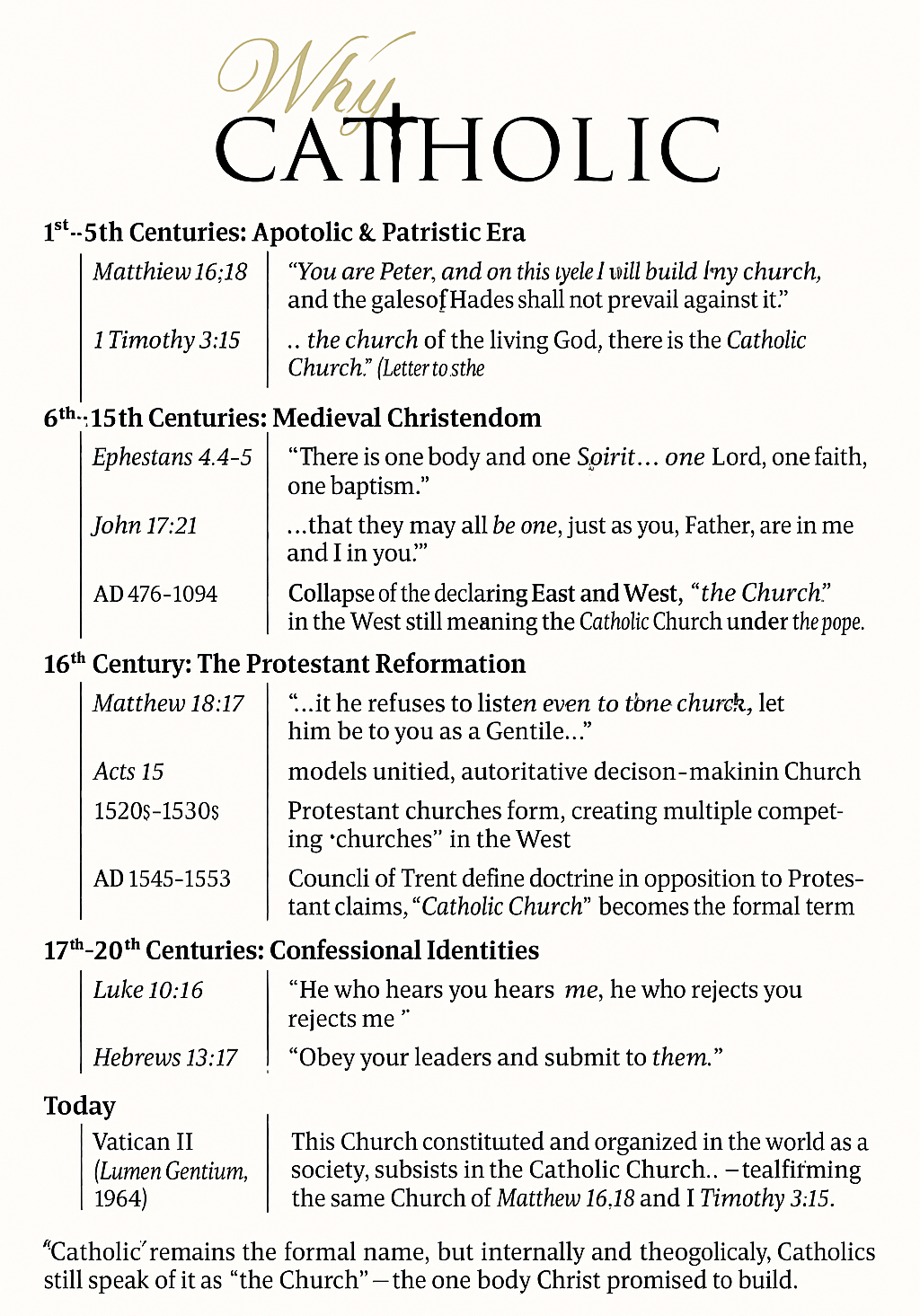
1st–5th Centuries: Apostolic & Patristic Era

Biblical foundation in use:

  • Matthew 16:18 — “You are Peter, and on this rock I will build my church, and the gates of Hades shall not prevail against it.” (One Church, singular)

  • 1 Timothy 3:15 — “…the church of the living God, the pillar and foundation of the truth.” (One visible, authoritative body)

Events:

  • c. 30–100 AD — Apostles lead the early Church; “the Church” means the universal body of believers in unity with apostolic authority.

  • 110 AD — St. Ignatius of Antioch: “Wherever Jesus Christ is, there is the Catholic Church.” (Letter to the Smyrnaeans, 8:2) — first recorded use of “Catholic” to mean universal.

  • 325 AD — Nicene Creed declares belief in “one, holy, catholic, and apostolic Church.” The adjective catholic means “universal,” not denominational.


6th–15th Centuries: Medieval Christendom

Biblical foundation emphasized:

  • Ephesians 4:4–5 — “There is one body and one Spirit… one Lord, one faith, one baptism.”

  • John 17:21 — “…that they may all be one, just as you, Father, are in me and I in you.”

Events:

  • 476–1054 AD — Collapse of the Western Roman Empire; papal primacy solidifies in the West. “The Church” refers to the Roman, papal-led Church.

  • 1054 AD — Great Schism divides East and West; in the West, “the Church” still means the Catholic Church under the pope.

  • 12th–15th Centuries — Small heretical movements emerge, but Catholicism dominates Western Christianity.


16th Century: The Protest Against the Catholic Church – Reformation

Biblical foundation reaffirmed:

  • Matthew 18:17 — “…if he refuses to listen even to the church, let him be to you as a Gentile…” (Presumes a visible, authoritative Church)

  • Acts 15 — The Council of Jerusalem models unified, authoritative decision-making in the Church.

Events:

  • 1517 AD — Martin Luther’s 95 Theses spark widespread dissent.

  • 1520s–1530s — Protestant churches form, creating multiple competing “churches” in the West.

  • 1545–1563 AD — Council of Trent defines doctrine in opposition to Protestant claims. The term “Catholic Church” becomes the formal designation to distinguish it from Protestant bodies.


17th–20th Centuries: Confessional Identities

Biblical foundation preserved in Catholic catechesis:

  • Luke 10:16 — “He who hears you hears me; he who rejects you rejects me.”

  • Hebrews 13:17 — “Obey your leaders and submit to them…”

Events:

  • 1600s–1700s — Protestant-majority nations adopt “Roman Catholic Church” to distinguish from their state churches.

  • 1800s–1900s — The Catholic Church continues to stress its claim to being the one true Church founded by Christ.


Today

Biblical continuity:

  • Vatican II (Lumen Gentium, 1964): “This Church constituted and organized in the world as a society, subsists in the Catholic Church…” — reaffirming the same Church of Matthew 16:18 and 1 Timothy 3:15.

Events:

  • The Church remains called “Catholic” in formal use, but internally and theologically, Catholics still speak of it as “the Church” — the one body Christ promised to build.

The One Holy, Catholic & Apostolic Church

  • Apostolic Succession

    • Catholic bishops are ordained in a line that the Church holds goes back to the apostles, through the laying on of hands (cf. Acts 1:20–26; 2 Timothy 2:2).

    • This succession is both sacramental (authority to teach, sanctify, and govern) and doctrinal (faithfully handing on the apostolic teaching).

  • Historical Continuity

    • From Peter and the apostles in the 1st century to Pope Francis today, the Catholic Church maintains an unbroken episcopal lineage.

    • Early Church Fathers — such as St. Irenaeus (Against Heresies, c. 180 AD) — listed the bishops of Rome as a way to prove the authenticity of the Church’s teaching against heresies.

  • Contrast with Other Churches

    • Eastern Orthodox Churches also claim apostolic succession but are in schism from Rome since 1054.

    • Protestant communities, emerging in the 16th century, generally reject or have lost apostolic succession in the Catholic sense.

  • Theological Significance

    • The Catholic Church sees this continuity as part of Christ’s promise in Matthew 16:18 — that the Church He founded would never be overcome.

    • The Church is therefore not just “like” the early Church; it is the same Church, growing organically through history.

The Catholic Church

Want to Go Deeper?

History raises an important question:
If Christ founded one visible Church, how did Christianity become divided into thousands of interpretations?

In Catholics Are Wrong… Says Who?, we walk through the most common objections to Catholic teaching — Scripture, Mary, the papacy, confession, and the Eucharist — and compare them directly with the Bible and early Christian history.

Instead of assuming what Catholics believe, you’ll see what the earliest Christians actually practiced and why it matters today.

👉 Read the full explanation at CatholicsAreWrong.com

You have been deceived

You Have Been Deceived

“You have been deceived” and “they teach a false gospel” are two common phrases you will undoubtedly come across if you spend any time on the internet exploring religion. Whether it is a video, a written article, or a blog post, it seems no one is immune to the criticism. Indeed false teachings have always been around. Like today, some were innocent mistakes, and others were deliberately meant to lead people away from the truth. 

Knowing fall well the potential for erroneous and false teaching, Jesus, at the last supper, prayed to his Father, “let them be one as you and I are one” — Jn 17-9 and to “consecrate them in truth” — Jn 17-17.

In the early Church, long before the Bible was completed, the Apostles guaranteed the truth of what was said.  Today the Apostolic and universal Church is the successor to the Apostles, and if someone preaches in opposition to the Church, it is to be considered false —Luke 10:16.

You Have Been Deceived —True or False

The person claiming another has been deceived or that they are preaching a false Gospel typically bases his proclamation of blasphemy by pointing toYou have been deceived discrepancies in the Bible between how they understand the text and what the false prophet claims mean. Of course, implicit in their attack is the belief they possess the definitive correct interpretation, and anyone who arrives at a different understanding is being deceived. 

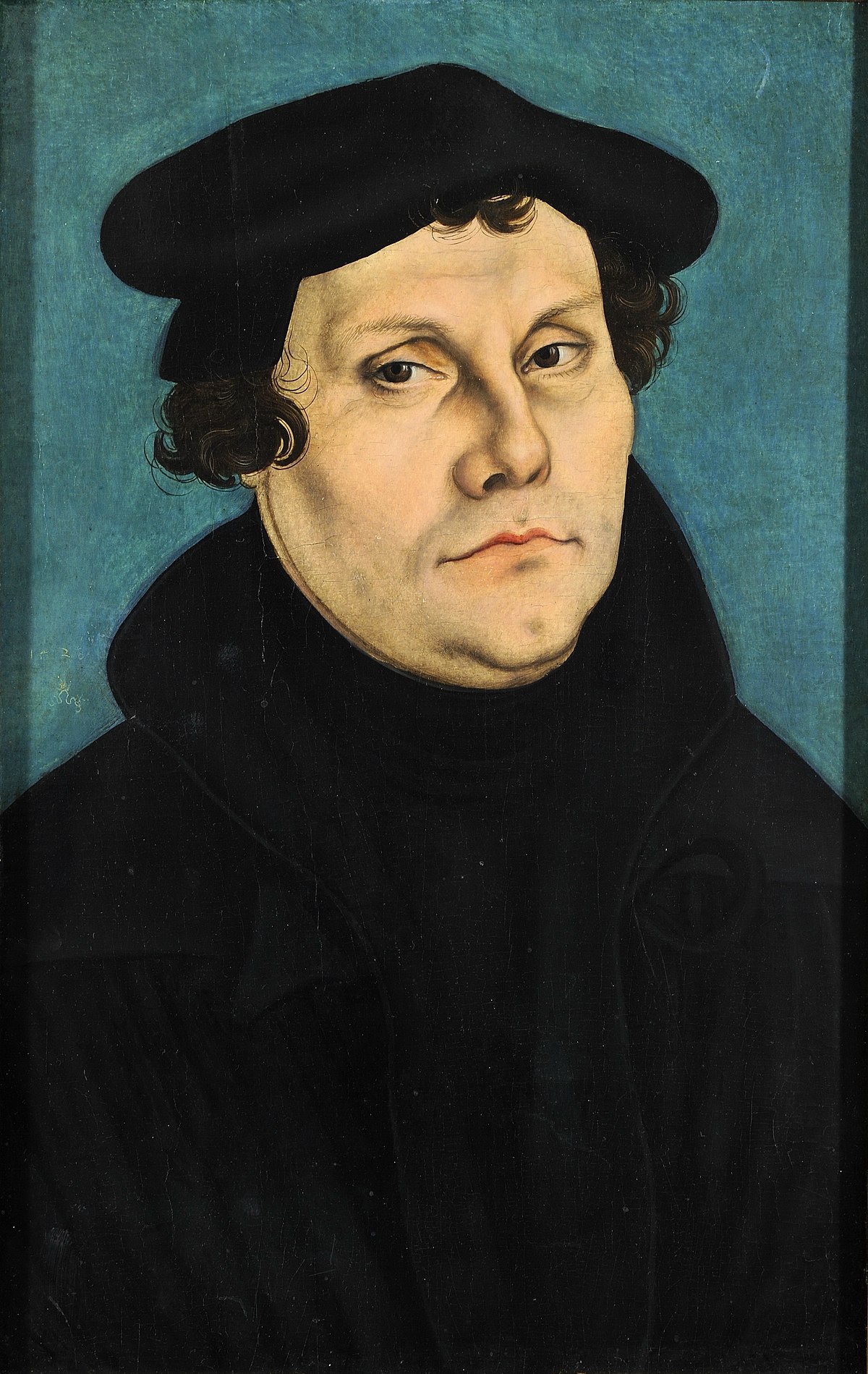
One need not be a theologian or philosopher to see the problem with holding such a position. Since the time of Luther, a Catholic monk who followed the apostle’s teaching until he decided he knew better, thousands upon thousands of Christians operating outside the apostolic church like Luther have claimed that everyone else is teaching a false Gospel. Luther not only changed long-held Christian traditions overnight, but he also deleted parts of the Bible. Many think Luther reformed the Church, but nothing could be further from the truth. Click here to read how Luther’s reformation was a lie.

How To Be a Christian

The core element of Christianity is to follow Christ. This is not an easy task, as evidenced by Luther’s experience. Therefore many make up their own faith and sprinkle the name of Jesus around and quote a few Bible verses, usually out of context and often incomplete. One Christian YouTuber called “How To Be Christian” describes it as “Build-A-Bear” Christianity, where each person makes his form of what they call Christianity.

Ironically this is far from being Biblical, which all dissenters claim to be interpreting correctly. In the Great Commission (Matt. 28:18–20), which elucidates the mission of the Church

“Go therefore and make disciples of all nations . . . teaching them to observe all that I have commanded you.”

Christ wants us to follow him fully, not just the parts we like. More importantly, Christ doesn’t want us to just believe in him; that won’t get you very far; after all, the devil believes in him. He wants us to become like him.

Each new denomination pulls further and further away from the fullness of Christ. As mentioned, Luther removed books from the Bible. The sacraments have largely been abandoned, and many Christian followers commonly accept divorce. Until 1935, almost every Christian denomination reputed contraception, recognizing it for its evil. After the Anglican church began allowing contraception, every other Christian denomination changed with time and began allowing its use. Only the Catholic Church consistently taught against the evil of contraception.

And Jesus came up and spoke to them, saying, ‘All authority has been given to Me in heaven and on earth. Go therefore and make disciples of all the nations, baptizing them in the name of the Father and the Son and the Holy Spirit, teaching them to observe all that I commanded you; and lo, I am with you always, even to the end of the age —Matthew 28:20

God of course safeguarded his people from being deceived. This verse in Matthew assures Christians that God would be permanently indwelled with his One, Holy, Catholic, and Apostolic church protecting them from deception.  In the same way God gave authority to Christ, Christ  gives his Church authority to teach and shepard his flock.

Contraception was universally understood to be a direct contradiction of the natural procreative purpose of sexual intercourse, separating the unitive aspect of love from the potential for creating new life, which is seen as a fundamental good. The Catholic stood alone in its unwavering declaration that using any form of artificial contraception is deemed intrinsically wrong regardless of the circumstances.

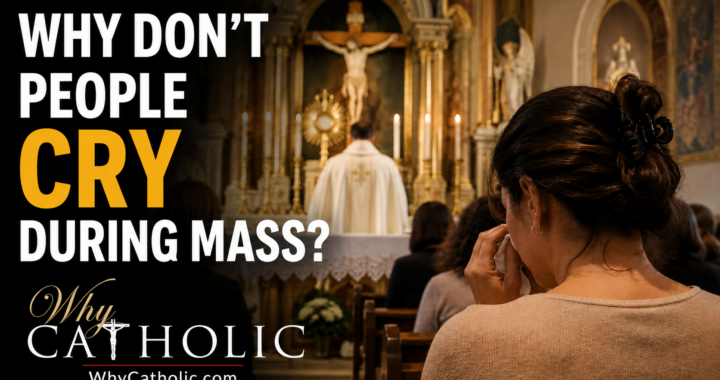
Why Don’t People Cry During Mass?

During a recent Mass, my 3-year-old son tugged at my sleeve and said, “Daddy, look, grandma is crying.” He refers to older women as “grandma,” older men as “grandpa,” and older children as “big brother” or “big sister.” He’s too young to ask why she cried. It made me wonder as I prayed for her. I thought about the emotions people experience at Mass. I began to wonder— Why don’t people cry during Mass?

Some might cry during Mass for deeply personal reasons. Perhaps they’ve recently lost a loved one, are struggling with personal hardships, or feel overwhelmed by emotion. During the consecration of the Eucharist, in particular, many feel a profound connection to Christ’s suffering. As they reflect on His ultimate sacrifice, they may shed tears. They feel humbled by the weight of His love. They also recall the brutal death He endured for all of us.

But it’s not every day that you see someone crying during Mass. Why is that? What keeps people from experiencing these emotions more frequently?

Why Don’t More People Cry During Mass?

Part of the answer might lie in how we approach Mass. People unknowingly engage in behaviors that detract from its sacredness. These distractions prevent us from fully connecting with the deeper spiritual realities present during the Mass.

Here are some common behaviors that can diminish the reverence we should bring to Mass:

1. The Orans Posture During the Our Father
The Orans posture—raising one’s hands while praying—is traditionally reserved for the priest. Congregants imitating this gesture blur the lines between clergy and laity. This blur may distract from the prayer’s solemnity.

2. Excessive Time During the Sign of Peace
The Sign of Peace is a beautiful gesture meant to share Christ’s peace, but when prolonged, it can shift the focus away from the sacredness of the Mass and become more about socializing.

3. Clapping During the Liturgy
While well-intentioned, applause—especially after a sermon or choir performance—turns the focus from worshipping God to human achievement, which takes away from the reverence of the Mass as a divine celebration.

4. Excessive Socializing Before and After Mass
Building community is important, but excessive talking in the church can reduce the sense of holy reverence that should be present in the sacred space.

5. Not Fasting Before Receiving the Eucharist
Catholics are called to fast for at least one hour before receiving Communion as a spiritual preparation for receiving Christ. Failing to fast can reduce the sense of reverence for the Eucharist.

6. Cell Phone Use
Even discreet cell phone use can pull us away from the prayerful atmosphere, disrupting the focus on the Mass.

7. Holding Hands During the Our Father
While holding hands can symbolize unity, it can sometimes become a distraction, focusing more on those around us than on the prayer and our connection with God.

8. Overuse of Extraordinary Ministers of Holy Communion
While these ministers assist in distributing Communion, overuse may diminish the unique role of the priest in consecrating and administering the Eucharist.

9. Ushers Talking During Communion
The reception of the Eucharist is the most sacred moment of the Mass. When ushers talk to people in line, it disrupts the reverence and solemnity of this profound encounter with Christ.

Understanding the Early Christian Roots of the Mass

To fully grasp why we should strive for reverence during the Mass, it helps to remember its origins. In the earliest days of Christianity, followers of Christ gathered for the breaking of the bread. They met in small, intimate settings (Acts 2:42). This wasn’t just a meal; it was a deeply spiritual act in which they participated in the mystery of Christ’s sacrifice.

The Catholic Mass continues this tradition. It’s more than just a gathering of people—Catholics believe in the Real Presence of Jesus in the Eucharist. During the consecration, bread and wine truly become the Body and Blood of Christ, making the Mass a sacred event where heaven and earth meet. This is fundamentally different from many Protestant services, which tend to focus on community worship and do not have the Real Presence of Jesus in the Eucharist. Protestant services often emphasize fellowship, prayer, and a sermon but lack the sacrificial nature of the Mass.

In this light, the distractions that occur during Mass take on even more significance. They pull us away from the profound mystery we’re participating in—Christ’s sacrifice—and prevent us from experiencing the deep emotions that might otherwise surface, including tears of reverence, gratitude, or sorrow.

Why We Should Strive for Reverence

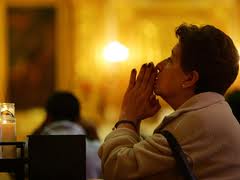
woman crying during Catholic MassIf we approach the Mass with proper focus and reverence, it becomes easier to open ourselves emotionally to the experience. When we strip away the distractions and give ourselves fully to the mystery and sacrifice being celebrated, we may find that we, too, are moved to tears.

The Mass is not just a communal gathering or an opportunity for social interaction—it is a sacred event where we encounter Christ Himself in the Eucharist. By maintaining reverence and focusing on the true purpose of the Mass, we can open our hearts to the awe and humility of being in His presence. With that focus, we might find ourselves overwhelmed by the love and mercy of God, just as others do. Perhaps then, we too might cry during Mass.

forgiveness

Pick up your Cross: Catholic and Protestant Perspectives on Faith and Suffering

In Christian teaching, Jesus’ command to “pick up your cross and follow me” (Matthew 16:24) but Carrying your cross differs for Catholics and Protestants. It is central to understanding how believers should live their lives. This call to carry one’s cross represents a path of discipleship, sacrifice, and perseverance in the face of suffering. However, how this teaching is interpreted and lived out varies between Catholic and Protestant traditions. While both emphasize faith in Christ, Catholicism emphasizes active participation in carrying one’s cross as part of salvation. In contrast, many Protestant traditions focus on salvation through faith alone, with less emphasis on personal suffering and sacrifice as necessary components of spiritual growth.

 The Catholic Understanding: Embracing Suffering and Participation

In Catholic teaching, “picking up your cross” is not merely a metaphorical concept—it is a call to actively participate in the redemptive suffering of Christ. Catholics believe that following Christ means imitating His willingness to endure hardship, even death, for the sake of others. This concept is deeply rooted in Catholic spirituality and theology, which holds that suffering can have redemptive value when united with Christ’s own suffering on the cross.

The Catholic Church teaches that through our own crosses—whether they be physical suffering, emotional struggles, or life’s challenges—believers are invited to participate in Christ’s redemptive work. This is not to suggest that human suffering is required for salvation but that suffering can be a means of drawing closer to God, offering our pain for the good of others, and growing in holiness. This belief is seen in practices like offering up one’s sufferings for the souls in purgatory or as penance for sins.

The Catechism of the Catholic Church states:

 “By his passion and death on the cross, Christ has given a new meaning to suffering: it can henceforth configure us to him and unite us with his redemptive Passion” (CCC 1505).

In this view, carrying one’s cross is integral to the Christian life. It aligns with the broader Catholic understanding that faith must be lived out through works (James 2:14-26), which includes enduring trials, embracing sacrifices, and offering these struggles to God in union with Christ’s suffering.

The Protestant Perspective: Salvation by Faith Alone

In contrast, many Protestant traditions interpret Jesus’ command to “pick up your cross” through the lens of *sola fide*—the belief that salvation comes by faith alone. Protestants emphasize that Christ’s sacrifice on the cross is sufficient for the salvation of all who believe in Him. This teaching, particularly championed by reformers like Martin Luther, focuses on the complete and total sufficiency of Christ’s work on the cross for the forgiveness of sins, without the need for human works or additional acts of suffering to achieve salvation. Listen to why this Protestant says you should not even make the sign of the cross.

For many Protestants, “picking up your cross” is understood as a call to live a life of obedience to Christ, but it does not hold the same redemptive connotation that it does in Catholicism. The cross, in Protestant theology, represents the acceptance of Christ’s lordship and a willingness to follow Him, often in the face of opposition, hardship, or persecution. However, there is a strong emphasis that such suffering is a byproduct of faith, not a contributing factor to salvation. This is derived from the erroneous Reformation principle that salvation is a gift from God, received through faith, and not something earned or enhanced through personal effort or suffering.

Ephesians 2:8-9 emphasizes this idea:

 “For it is by grace you have been saved, through faith—and this is not from yourselves, it is the gift of God—not by works, so that no one can boast.”

While Protestants agree that a Christian life may involve hardships, they view these challenges as a test of faith rather than a form of participation in Christ’s redemptive work. Salvation, from this perspective, is entirely reliant on the finished work of Christ on the cross, and human suffering has no role in contributing to one’s salvation.

Points of Convergence and Divergence

While both Catholic and Protestant perspectives affirm the need for faith in Christ and recognize that the Christian life involves sacrifice, the role and purpose of suffering differ between the two. Catholics see suffering as a way to unite with Christ’s passion and contribute to spiritual growth, while Protestants typically view suffering as a consequence of following Christ, with no salvific value in itself.

Convergence:

– Both traditions agree that discipleship involves self-denial and a willingness to face hardship.
– Jesus’ call to “pick up your cross” is a command to follow Him, despite the costs.

Divergence:

– Catholicism teaches that human suffering, when offered in union with Christ, has redemptive value.
– Protestantism emphasizes that salvation is by faith alone, and suffering is not a part of the salvific process but rather a result of living a life obedient to Christ.

Conclusion

The teaching of Christ to “pick up your cross” is a powerful reminder of the demands of Christian discipleship. For Catholics, this means an active participation in Christ’s suffering, seeing value in offering up one’s trials in union with Christ for the redemption of the world. For many Protestants, this teaching points to the call to follow Christ, trusting in His grace alone for salvation, while recognizing that faith may lead to hardship. Both perspectives call Christians to a life of dedication and self-denial, though they understand the nature and purpose of suffering in different ways.

By examining these perspectives, we see how the same scriptural command can be understood in diverse ways, shaped by different theological frameworks but united in their reverence for Christ’s ultimate sacrifice on the cross.

References:

– Catechism of the Catholic Church, Section 1505. Read online here
– The Bible, Matthew 16:24, James 2:14-26, Ephesians 2:8-9.
– Martin Luther, “The Freedom of a Christian,” on justification by faith alone.

Why God Is The Bigger Elvis- The Catholic Nun Who Kissed Elvis Presley

The beautiful Dolores Hart, who was often compared to Grace  Kelly, was just 19 when she filmed her first movie scene: kissing Elvis Presley in the movie “Loving You” in 1957. Dolores became an overnight star soon after Paramount released the movie.

The young actress was one of the millions of adoring fans Elvis would come to have. She never missed a chance to hear Elvis sing. “He totally took you when he was singing on stage,” she said in an interview.

Dolores came from a non-Catholic family that left her in Chicago, so her father could pursue his acting career in Los Angeles. She would be raised by her grandmother, who had suggested that her teenage daughter abort Dolores, feeling she was too young to have a child.  Her grandmother enrolled young Dolores in a Catholic school (it was closer to home), where she went to Mass every morning and would ultimately become Catholic.

Dolores recognized in Elvis, the Mississippi Pentecostal, a fellow spiritual seeker. They would often discuss Scripture together. Elvis would usually pull out a Bible and ask for her thoughts on various verses.  Although Elvis’s spiritual journey is complex, even the most sincere searches can get sidetracked. As fame and fortune became a detriment to his faith, Elvis found solace in Gospel music, for which he received three Grammy Awards. Ironically, the only Grammy Awards he would ever receive were for this song. According to Christian Today,  Elvis once said:

“All I want is to know the truth, to know and experience God, I’m a searcher, that’s what I’m all about.”

Dolores credits daily Mass for helping keep her grounded. After a long Broadway run, a friend encouraged her to recuperate at Regina Laudis, a Connecticut abbey of cloistered Benedictine nuns. Dolores felt a feeling of peace there and knew it wasn’t simply the reprieve from Hollywood pressures. “What I was finding at Regina Laudis,” she writes, “was the peace that had first attracted me to the Catholic Church, and when I went away, I carried it with me.”

When she was cast as Clare in the movie Francis of Assisi, filmed in Rome, she was invited to a papal audience with Pope John XXIII, who greeted her as “Chiara” (Clare).

As she continued making movies and experiencing increasing fame, she began dating the not-so-famous Don Robinson, a handsome Catholic architect. The two were engaged for a year. Dolores’ dream of marriage and motherhood was within reach: The big day would be Feb. 23, 1963. But the tug of religious life persisted, and Don felt Dolores grow distant. “You’re still thinking about that monastery, aren’t you?” he asked.

On another visit to the monastery, she again felt its powerful draw. While walking through a pine forest as the snow fell, Dolores sobbed over her confusion. Besides giving up Don, she’d also be forfeiting a fairytale career, including four scripts from MGM and an offer from Universal to star opposite Marlon Brando. That same day, she penned a letter to God, writing,

“I can’t understand your ways.”

Dolores broke the news to Don on her first day back from her visit. They met with the priest set to marry them, who was baffled by Dolores’ decision. She entered the convent on June 13 and cried herself to sleep that night. In what can only be described as true love, Robinson, initially crushed, never married, but remained a friend and visitor to the abbey until his death at the end of 2011.


“My life in the monastery has allowed me to be open to the grace of creation and what it means to be a human being in the world.”


Many of her friends and Hollywood colleagues could not understand the young starlet’s decision; Elvis Presley did.


God Is the Bigger Elvis

HBO] HD. The Oscar(R)-nominated documentary about a promising young actress who left Hollywood to become a nun.


3 Beautiful Celebrities Who Gave It All Up to Become Nuns (or Close)

What makes a person happy? What makes a life worth living? Is it money? Fame? Popularity? Career success? We all know the answer, even if we don’t always live like we know it: not at all. All of these things come up short. There is only one thing – or


same sex blessings

No The Pope Is Not Changing Teaching On Marriage

blessing same unions

The Pope’s recent words regarding those in same-sex unions asking for a blessing should not be seen as an indication that the Church is or will soon change its teaching on marriage. Many people are attempting to twist the Pope’s words, but the truth is that there is no intention to modify the Church’s stance on marriage.

As much as many would like to see the Catholic Church change, as other Christian denominations have, and conform to modern society it can not.

Similarly, many Catholics criticize the Pope believing he is in error to allow blessing individuals engaged in same-sex relationships. Some have even suggested that he is calling for the blessing of the union itself, something he is not.  Indeed much of the confusion seems to have come from those who have not read the official Vatican document and instead have merely relied upon sensationalized media headlines.

When the declaration is read in its entirety we can see that the Pope is not allowing for the Blessing of the union of same-sex couples he is allowing for the blessing of the persons of the couple.

Why A Blessing

Anyone can ask for a blessing when they are seeking God’s assistance, mercy, and grace. Blessings serve to invoke God’s help, presence, and love in a person’s life. As the Pope noted: Those who ask for a blessing show themselves “to need God’s saving presence” in their lives by expressing “a petition for God’s assistance, a plea to live better” (par. 21). This request should be received and valued “outside of a liturgical framework” when found “in a realm of greater spontaneity and freedom” (par. 23). Some seem to believe that being a sinner precludes them from asking for a blessing.

This is contrary to Christian teaching that goes back to Christ himself and defies the basic tenets of Christian doctrine that God’s mercy has no limit and we do not know how his grace can come upon us. Instead of criticizing and judging, we should be prayerful that the blessing received will have an impact on those petitioning for them so that their soul may receive a supernatural kick in the pants or encouragement.  Anyone can ask for a blessing when they are seeking God’s assistance, mercy, and grace.

The Vatican’s Own Words

From the Vatican document: Declaration Fiducia Supplicans On the Pastoral Meaning of Blessings

The Vatican document, titled “Declaration: Fiducia Supplicans On the Pastoral Meaning of Blessings,” emphasizes that requesting a blessing signifies a recognition of the need for God’s saving presence and a desire to live better. These requests can be made outside of formal liturgical settings, allowing for spontaneity and freedom. The document highlights that blessings should be viewed as acts of devotion within popular piety, and individuals seeking blessings should not be expected to possess moral perfection beforehand.

It further states that rites and prayers must not create confusion between the true definition of marriage as the exclusive, stable, and indissoluble union between a man and a woman, open to procreation, and any beliefs or practices that contradict this understanding. The Catholic Church’s doctrine on marriage remains unchanged and unwavering in this regard.

When seeing them from the perspective of popular piety, “blessings should be evaluated as acts of devotion.” Those requesting a blessing “should not be required to have prior moral perfection” as a precondition, the Declaration notes.
Therefore, rites and prayers that could create confusion between what constitutes marriage—which is the “exclusive, stable, and indissoluble union between a man and a woman, naturally open to the generation of children”[6]—and what contradicts it are inadmissible. This conviction is grounded in the perennial Catholic doctrine of marriage; it is only in this context that sexual relations find their natural, proper, and fully human meaning. The Church’s doctrine on this point remains firm.

The Promise

heNow, let’s look at why Pope Francis, or any Pope for that matter can not change an official Church teaching such as Marriage. Christ made a promise that his Church, The ONE, Holy, Catholic (universal), and Apostolic Church, the promise is that it will endure until the end.

“The gates of hell shall not prevail” — Matthew 16

Although some may see with the eyes of the flesh that the Pope is attempting to lead the Church astray and that this is the gates of hell prevailing. The eyes of faith see what is unseen.

Advent Is More Than You Might Think

Today is the first day of advent but what is advent exactly? If you are like many Christians you know that advent is the beginning of the Christmas season. The Church follows a six-season liturgical calendar. The six seasons are:

what is advent

  • Advent – four weeks of preparation before the celebration of Jesus’ birth
  • Christmas – recalling the Nativity of Jesus Christ and his manifestation to the peoples of the world
  • Lent – a six-week period of penance before Easter
  • Sacred Paschal Triduum – the holiest “Three Days” of the Church’s year, where the Christian people recall the suffering, death, and resurrection of Jesus
  • Easter – 50 days of joyful celebration of the Lord’s resurrection from the dead and his sending forth of the Holy Spirit
  • Ordinary Time – divided into two sections (one span of 4-8 weeks after Christmas Time and another lasting about six months after Easter Time), wherein the faithful consider the fullness of Jesus’ teachings and works among his people

Advent (from, “ad-venire” in Latin or “to come to”) is the season encompassing the four Sundays (and weekdays) leading up to the celebration of Christmas. While advent serves as an anticipation of Christ’s birth it is actually more than that.

“The celebration of Advent is possible only to those who are troubled in soul, who know themselves to be poor and imperfect, and who look forward to something greater to come.” ~ Dietrich Bonhoeffer

Advent is more than a birthday celebration

Advent is a time of preparation that should direct our hearts and minds to Christ’s second coming as well as his birthday. Hope is a predominant theme of Advent. The Israelites hoped for a Messiah to come, and Christ entered the world. We are hopeful for the arrival of Christ again into the world. Scripture warns us not to predict his second coming advent is not about speculating it is about spiritual readiness. This spiritual readiness for Christ’s second coming is why advent should be not only a time of celebration but also a time of penance and quieting and disciplining our hearts for the fullness of the Christmas season.


Stevie Nicks abortion

Amy Coney Barrett Proves Rock Legend Stevie Nicks Wrong

amy coney barrett familyIt is pretty easy to see how Amy Coney Barrett Proves Rock Legend Stevie Nicks Wrong. You do not need a degree in philosophy or theology to understand why. The left has several problems with Amy Coney Barrett. First, she is Catholic and takes her faith seriously.

The second problem leftists have is that Amy Coney Barrett blows a big gaping hole in their whole —women need abortions to get ahead narrative. She has seven children, 2 of who are adopted, and one who has down syndrome.


Rock legend Stevie Nicks recently said that without her abortion, “we would not have Fleetwood Mac.” 

Stevie Nicks Says “There Would Have Been No Fleetwood Mac” If She Had Not Gotten an Abortion – E! Online

More than 40 years since undergoing an abortion, Stevie Nicks has spoken publicly about the impact of that decision on her iconic band, Fleetwood Mac.

I love Fleetwood Mac’s music, but I would rather live in a world without Fleetwood Mac than a world without a woman like Amy Coney Barrett or any other human being that had to be killed for a band.

Perhaps there may not have been a Fleetwood Mac if Stevie had her baby instead of aborting it. That is a question that we will never have a definitive answer for. Stevie Nicks, however, is a talented musician, and there is no reason to think her talent would have disappeared had she not killed her child. Who knows what might have been if she had given birth. Who knows what inspiration her child might have provided her and others.

Archbishop Vigano recently wrote that we are in a battle between darkness and death and light and life. President Joe Biden is serving as witness to the words of the outspoken Archbishop. President Biden’s decades-long evolution on abortion rights mirrors that of the Democrat party at large. At one time, the party championed the hallow words “abortion should be safe and rare”. Today, it promotes abortion as a moral and ethical favorable decision, and the government should provide funding for those who want to kill their children. 


Peterson praying the rosary

Jordan Petersons Wife Is Praying The Rosary

Jordan Peterson’s wife, Tammy Peterson, is praying the rosary, and it is helping him. Dr. Jordan Peterson has become a global phenomenon. His book, Twelve Rules for Life: An Antidote to Chaos has sold millions of copies. His YouTube videos have over 40 million views and millions more, with editors taking clips and reuploading them. With his students and colleagues at Harvard and the University of Toronto, Dr. Peterson has published over a hundred scientific papers, transforming the modern understanding of personality. At the same time, his book Maps of Meaning: The Architecture of Belief: The architecture of Belief revolutionized the psychology of religion.

Peterson has studied evil for most of his adult life and is well-informed on the atrocities of communism, fascism, and nazism. As a psychologist, he was most interested in what led people to follow these great evils and to examine why individuals, not simply groups, engage in social conflict, and to model the path individuals take that results in atrocities like the Gulag, the Auschwitz concentration camp, and the Rwandan genocide.

In the Twelve Rules for Life, Peterson explores the origins of evil. In his book and talks, he posits that analyzing the world’s religious ideas might help us describe our essential morality and eventually develop a universal system of morality. While he is ambiguous when asked about his personal religious beliefs, he has become a vocal advocate for understanding the Biblical narratives and is known for juxtaposing them with contemporary psychological science and research.

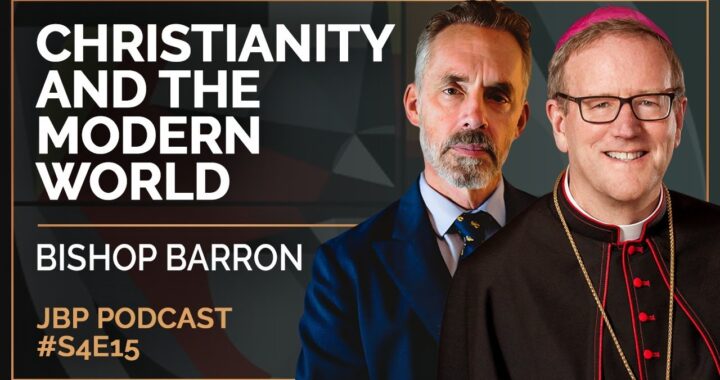
He has engaged in dialogue with believers such as Bishop Robert Barron and Jonathan Pageau, and with atheists such as Sam Harris and Matt Dillahunty. When asked if he believes in God, Peterson famously responds by saying:

I try to act as if God exists

Peterson’s perspective is that many religious people profess a belief in God, but their actions reflect an apathy towards any real sense of what true faith might mean. This would put him in stark contrast with the protestant community that ironically awaits his declaration to be a Christian. Many protestants see stated Belief as the only requirement to being a faithful Christian, something Peterson often criticizes as he did here in the conversation with talk show host Dennis Prager. Christians would or should side with Peterson, who says to believe means you “act it out you take up your suffering and carry your cross.”

In the same interview, Peterson tells Prager, a Jew, that he believes Catholicism is as sane as people can get

Recently, both Jordan and his wife, Tammy, have battled life-threatening ailments. Tammy from cancer and Peterson from complications with antidepressant withdrawal. They are both refreshingly transparent about their personal life, and the humility that each expresses is seldom found in today’s self-aggrandizing society. In the video below ,Peterson shares with Bishop Barron how Tammy has found peace in praying the rosary.

Peterson is not shy from discussing religion, as can be seen in this interview, he is talking with host Dave Rubin, a gay married man and atheist, and Ben Shapir,o an orthodox Jew, that Catholicism is the bulwark against the fragmenting of Christianity

Former Head Football Coach Terry Donahue- “Welcome Home”

While he had many accomplishments on the field, he was a significant inspiration that lead me back to my Catholic faith.

Despite being raised by two devout Catholic parents, receiving the sacraments, and going to Mass every Sunday, I left the Church as many unfortunate souls do in my teenage years. It would not be until my mid-twenties when I attend a business seminar in which the presenter encouraged the attendees to consider their spiritual life that I would even consider faith and its effect on my life. The presenter was a born-again Christian, and I will be forever grateful to him for planting a seed. I stumbled around for a few years, going to Mass from time to time and reading about different Christian denominations. Still somewhat confused, I nonetheless grew in my faith. One day I came across a program offered at a local Catholic Church given by Tim Staples, a renowned Catholic apologist that explained many of the myths anti-Catholics espoused. I immersed myself in more reading and study, but it was in meeting then head football coach at UCLA, Terry Donahue, that sealed the deal.

The business meeting that would change my life

Terry Donahue and Troy Aikman

UCLA head coach Terry Donahue shakes hands with quarterback Troy Aikman (8) after defeating Stanford 27-17 at the Rose Bowl. Mandatory Credit: USA TODAY Sports

A business client referred me to Coach, and we met at his house one evening going over some paperwork. I knew little about football and, quite frankly, didn’t initially know who Terry Donahue was. However, there was a presence that Terry had that till this day that can not be properly articulated, only to say I felt a certain amount of peace and gentlemanliness when we met.

Several days later, back in my office, an associate approached me and said, “Hey, I hear you are doing business with UCLA football coach Terry Donahue. I said yes.  Then the associate proceeded to tell me that while he was a USC guy, UCLA’s crosstown rival, he admired coach Donahue. He went on to tell me that a good friend of his saw coach Donahue at Mass every morning in Church near UCLA campus St. Paul, the Apostle. He added, he is always with this other Italian-looking guy.

That Italian-looking guy was Angelo, my client who first introduced me to coach Donahue. At that moment, I knew I was headed in the right direction and formally reentered the Catholic faith. Angelo would later be the best man at my wedding, and we have been close friends for almost 30 years now. Terry would retire from UCLA a year or two after my first meeting with him, and we enjoyed discussing business and family and stayed in touch until his untimely death on July 4th, 2021. 

Terry and his wife of 52 years, Andrea, came to my 50th birthday party hosted by my best man Angelo. At the party, I told Terry how he helped me back to the Church. His response was, “me, what did I do? We never talked about religion?” I said, “no, we didn’t but getting to know you, your family, your devotion to our faith, and how you treat others was an inspiration for me. He smiled and said,

“Welcome home”.

Upon his passing, I came across many coaches’ friends’ who posted thoughts and reflections on Facebook; one stood out that I feel compelled to share. I found it remarkable as it captured the essence of a man who affected so many lives with its succinctness and potency. With the picture of Terry and Andrea, the post read:

“They were a unit that, like for so many, bettered my life forever and always.  I have no doubts that Coach Terry Donahue will rest in peace.”


He certainly bettered my life, and I have no doubts either.  Rest in peace, and thanks for the friendship and inspiration coach.